Lyme Disease Antibodies Attached to Nanotubes
By LabMedica International staff writers
Posted on 10 Apr 2013
A fast and accurate sensor for a Lyme disease antigen has been developed that may pave the way for a diagnostic device. Posted on 10 Apr 2013
The potential of antibody-functionalized single-walled carbon nanotube (SWNT) field-effect transistors (FETs) has been examined which may lead to diagnostics that can detect the organism itself.
Scientists at the University of Pennsylvania (Philadelphia, PA, USA) fabricated the device and attached monoclonal Lyme antibodies specific for the Borrelia burgdorferi p41 flagellar antigen (antibodies-online Inc.; Atlanta, GA, USA) and histidine tagged Lyme antigen containing the p41 flagellar immunodominant region which is also known as flagellin (ProSpec; East Brunswick, NJ, USA). Attachment of B. burgdorferi (Lyme) flagellar antibodies to the nanotubes was verified by atomic force microscopy and electronic measurements.
After using atomic-force microscopy to show that antibodies had indeed bound to the exteriors of their nanotube transistors, the investigators tested them electrically to get a baseline reading. They then put the nanotubes in solutions that contained different concentrations of the target Lyme bacteria protein. The smallest concentration the nanotube devices could detect was four ng/mL of protein of solution.
Early diagnosis is critical in treating Lyme disease, nevertheless, nearly one quarter of Lyme disease patients are initially misdiagnosed because currently available serological tests have poor sensitivity and specificity during the early stages of infection. Misdiagnosed patients may go untreated and thus progress to late-stage Lyme disease, where they face longer and more invasive treatments, as well as persistent symptoms.
A.T. Charlie Johnson, PhD, a professor of physics and senior author of the study said, "If we were to do this type of test on a person's blood now, however, we would say the person has the disease. The first thought is that if you detect any protein coming from the Lyme organism in your blood, you are infected and should get treatment right away." The study was published online on February 4, 2013, in the journal Biosensors and Bioelectronics.
Related Links:
University of Pennsylvania
antibodies-online Inc.
ProSpec



Gold Member

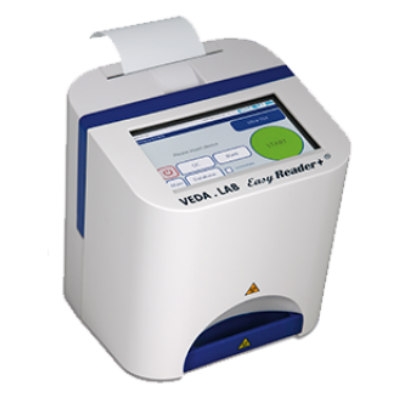
Quantitative POC Immunoassay Analyzer
EASY READER+

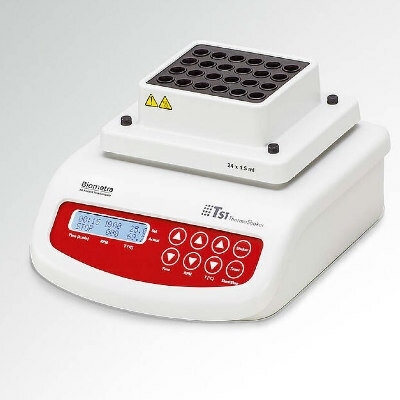

Benchtop Thermomixer
Biometra TS1 ThermoShaker


Automated Clinical Chemistry Analyzer
Envoy 500+