Infant Skin Microbiome Show Links to Later Eczema and Food Allergies
Posted on 15 Sep 2026
Eczema, or atopic dermatitis, and food allergies often begin in infancy and are among the earliest stages of the atopic march. Atopic dermatitis alone can affect up to 20% of children, yet objective indicators that appear before symptoms are not routinely used. The skin microbiome has emerged as a potential source of early signals linked to these conditions. New findings now show that microbial patterns on infant skin are associated with later eczema and food allergy outcomes.
Washington State University (Pullman, WA, USA) investigators used shotgun metagenomic sequencing to characterize the skin microbiome of infants. The approach profiles microbial taxa and their genetic functions directly from skin swabs using advanced DNA sequencing. Researchers then compared microbial features with subsequent clinical outcomes.
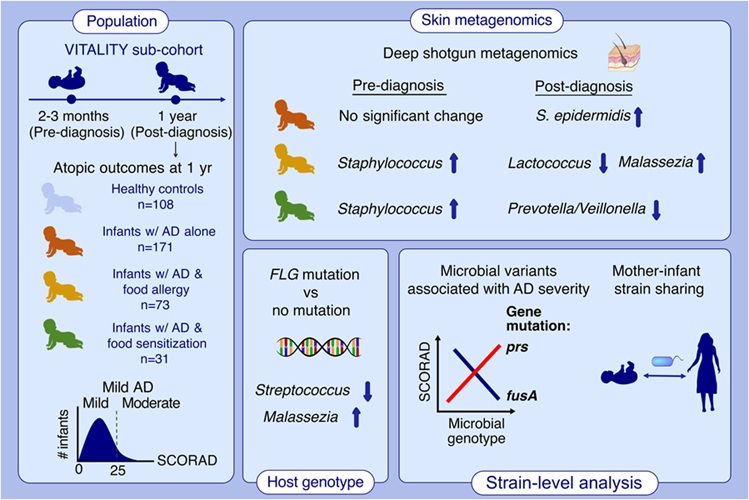
The study analyzed more than 1,000 skin swabs from 429 infants. Samples were collected at ages 2–3 months, before any participant had been diagnosed with eczema or food allergies, and again at 12 months. Participants also underwent assessments for eczema, food sensitization, and food allergies.
Microbial differences were detectable in early-life samples from infants who later developed eczema or food allergies, indicating that divergence in community composition and function can precede symptoms. Infants with eczema alone showed distinct profiles compared with those who developed eczema alongside food allergies or sensitization. The team also observed substantial sharing of microbes between mothers and infants.
Analyses of filaggrin (FLG) gene variants, one of the strongest known genetic risk factors for eczema, showed that infants with eczema who carried FLG mutations had distinct skin microbiome profiles compared with noncarriers, suggesting a link between host genetics and microbial ecology. The study was published in Allergy. The authors noted that continued follow-up will examine how early-life microbiome patterns relate to later outcomes, including asthma, and that these signals could help clinicians identify at-risk children earlier and support more personalized prevention and treatment strategies.
"We actually saw skin microbiome changes in infants who hadn't even been diagnosed with these diseases yet. That was one of the most exciting findings because those changes could potentially be used as biomarkers to help clinicians diagnose disease earlier," said Zeyang Shen, assistant professor in the WSU College of Veterinary Medicine's School of Molecular Biosciences and one of the study's lead authors.
"Today, these diseases are diagnosed after symptoms appear. If we can validate these microbial signals in other groups of children, they could potentially serve as early biomarkers that help identify disease risk much earlier," Shen added.
Related Links
Washington State University