Uptake of Next-Generation Sequencing in Europe Driven Largely by Personalized Medicine Developments
By LabMedica International staff writers
Posted on 02 Jun 2014
A new Frost & Sullivan (San Antonio, TX, USA) analysis has found the Western European next-generation sequencing (NGS) market poised for steady growth, owing to the emergence of many new applications.Posted on 02 Jun 2014
The new report, "Western European Next-Generation Sequencing Markets," indicates that growth will continue with the emergence of applications such as noninvasive prenatal testing and comprehensive oncology panels. NGS companies are further tapping into this space by forming partnerships with molecular diagnostic companies to quicken NGS adoption in clinics, particularly for oncology-based testing. Also, the future of DNA sequencing is predicted to shift from a laboratory-based setup to point-of-care testing in the next 5 years.
The report found that the market earned revenues of USD 381.9 million in 2013 and estimates this to reach USD 697.3 million in 2018. The total market, as defined by this study, includes next-generation sequencers and reagents for both research and diagnostic use. Major medical growth areas will include preimplantation genetic diagnosis, oncology testing, infectious disease, human leukocyte antigen typing, and companion diagnostics. Also, as applications expand to include food and safety testing (as well as crop improvement), ready-to-use sequencing-based tests that generate data from raw samples will emerge as important tools.
A key restraint curbing market potential is the lack of reimbursement norms, which leads to geographical disparity in terms of NGS test availability. The consequent need for the cross-border shipping of samples, prominent in Belgium, France, Italy, Spain, the UK, and Germany, makes gauging the reimbursement scenario extremely tough for market participants. Hence, NGS vendors must establish early, robust partnerships with regulatory bodies and devise effective business models to gain rapid regulatory clearance. Manufacturers must also look to adhere to the CE marking rather than laboratory developed test (LDT) policies to enable the easy generation of reimbursement codes.
"Companies within the space of personalized healthcare are designing instruments to target specific needs across the clinical diagnostic spectrum, therefore adding NGS capabilities to their portfolio," said Divyaa Ravishankar, Healthcare Senior Industry Analyst at Frost & Sullivan. "As long as the genomic era interfaces with personalized medicine, NGS uptake will continue."
"Given the recent technology advancements in Europe, the future of DNA sequencing will move away from a laboratory-based setup to point-of-care testing," predicted Ms. Ravishankar. "Frost & Sullivan expects NGS to become an area of interest to all market leaders within the point-of-care testing domain, as they strive to bring sequencing from 'bench to bedside'."
Related Links:
Frost & Sullivan
Life Sciences Growth Partnership Service program




Platinum Member

Automated Coagulation Analyzer
Hemolumi H6
Platinum Member
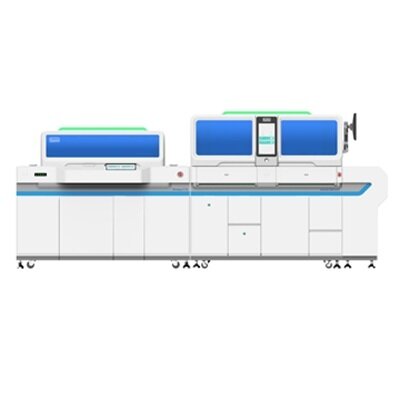
Integrated Biochemical & Immunological System
Biolumi CX Solution X10+C10
Gold Member
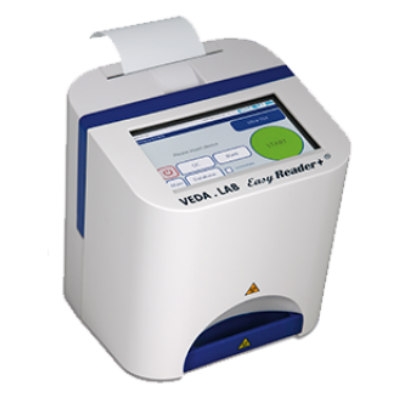
Quantitative POC Immunoassay Analyzer
EASY READER+