Blood Biomarker May Predict Colitis Risk in Checkpoint Inhibitor Therapy
Posted on 23 Sep 2026
Immune checkpoint inhibitors can trigger immune-related colitis that leads to severe diarrhea, abdominal pain, and treatment interruptions. Clinicians currently lack validated tools to identify which patients will develop this toxicity before symptoms begin. A reliable blood-based indicator could enable earlier monitoring and more targeted supportive care in oncology workflows.
Researchers at The University of Texas MD Anderson Cancer Center (Houston, TX, USA) have identified blood-based B-cell measurements as a potential biomarker for immunotherapy-related colitis. The study focuses on B cells, a key component of the adaptive immune system, and found that changes in their activity were associated with the development of colitis caused by immune checkpoint inhibitors. The results suggest that monitoring circulating B-cell activity before and during treatment could help stratify patients according to their risk of developing this immune-related toxicity.
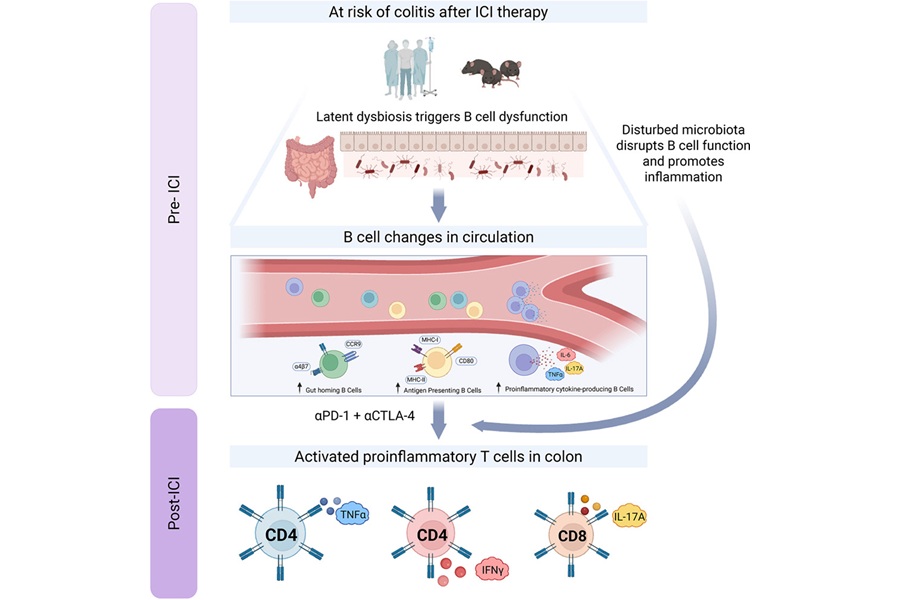
Mechanistically, early B-cell activation preceded the expansion of inflammatory T cells that damage intestinal tissue, placing B cells upstream in the inflammatory cascade. Patient samples also showed that individuals who later developed immunotherapy-related colitis had higher levels of circulating B cells before treatment. To further validate these associations and track immune changes over time, investigators developed preclinical models that reproduced key features of the toxicity.
In these models, depleting B cells before treatment reduced both clinical and histologic signs of colitis, lessened intestinal damage, and limited downstream inflammatory T-cell responses. The findings also indicated that B cells may promote immune cell trafficking into the colon, helping sustain inflammation once it begins.
Researchers additionally examined the gut microbiome and found that colitis-susceptible models had altered microbial communities associated with abnormal B-cell activation. Restoring healthier bacterial populations through fecal microbiota transplantation reduced colitis severity and dampened inflammation, further linking microbial changes with B-cell-driven immune activity.
The authors state that these preclinical data support the use of blood-based B-cell measurements to identify patients at higher risk before therapy begins and point to preventive strategies that target B cells or modulate the microbiome. The study was published in Cell Reports with collaborators that included Cleveland Clinic in Ohio and Abu Dhabi. The team notes that larger patient cohorts are needed to validate these observations.
“Immune checkpoint inhibitors have significantly improved outcomes for patients with advanced cancer, but they can also come with severe side effects that may disrupt treatment. Our study suggests that early B cell dysregulation sets off an inflammatory cascade in some patients while they are asymptomatic, serving as a driver of and predictive biomarker for risk of immunotherapy-related colitis that can guide future preventive treatment strategies,” said Roza Nurieva, Ph.D., professor of Immunology at The University of Texas MD Anderson Cancer Center.
Related Links
UT MD Anderson Cancer Center