Screening Test Detects Early Onset Preeclampsia
By LabMedica International staff writers
Posted on 26 Aug 2013
An innovative early onset preeclampsia screening test is now available that enables physicians to more precisely detect asymptomatic patients in the first trimester of pregnancy.Posted on 26 Aug 2013
The serum-screening test will identify those who are at high risk for developing the dangerous condition, allowing for earlier identification, management, and intervention.
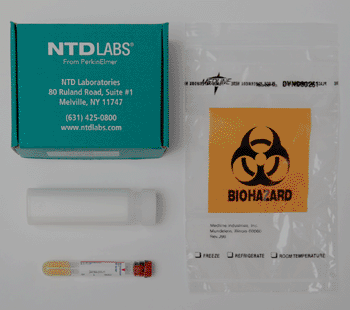
Image: Shipping Kit for PreeclampsiaScreenT1 (Photo courtesy of PerkinElmer).
The test known as PreeclampsiaScreenT1 (PerkinElmer NTD Labs; Melville, NY, USA) is administered during the first trimester of pregnancy through a simple blood test to detect three biochemical markers in the mother's blood. These are the pregnancy-associated plasma protein-A (PAPP-A); the placental growth factor (PlGF), and the alpha fetoprotein (AFP). When evaluated collectively with personal demographic data, provide an individual risk of developing early onset preeclampsia. Physicians have the option to provide two additional biophysical measurements for their patients, mean arterial pressure (MAP) and uterine artery Doppler pulsatility index (UtAD-PI).
Early onset preeclampsia is defined as a sudden increase in blood pressure and protein in the urine, which leads to delivery of the fetus prior to 34 weeks' gestation. If found early, options such as increased monitoring, modified activity, bed rest and medication can help reduce or avoid complications related to early onset preeclampsia.
Jiri Sonek, MD, RDMS, an adjunct professor, at Wright State University (Dayton, OH, USA) said, “Preeclampsia is one of the remaining great challenges in obstetrics. It is a major cause of maternal, fetal, and neonatal morbidity and mortality. Fortunately, some physicians may recommend a simple and inexpensive intervention to reduce the risk of preeclampsia, which is available in the form of low-dose aspirin. However, this treatment is effective only if begun early in pregnancy. That is why first trimester screening is such a critical component of preeclampsia prevention."
Related Links:
PerkinElmer NTD Labs
Wright State University




Platinum Member

Automated Coagulation Analyzer
Hemolumi H6
New
Gold Member

Serum Indices Control
Acusera Serum Indices Control
Gold Member
Pre- Eclampsia Control
Acusera Pre-Eclampsia Control
New

Neurofilament Light Chain Assay
Lumipulse G NfL Blood