Immunoassay Detects Five Encephalitis Viruses
By LabMedica International staff writers
Posted on 05 Jul 2012
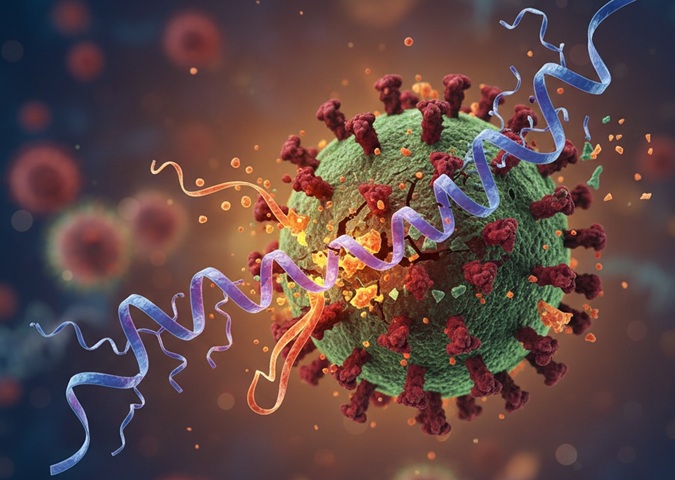
An enzyme-linked immunosorbent assay (ELISA) array had been developed that will detect five different encephalitis viruses. Posted on 05 Jul 2012
The ELISA-array assay is based on a sandwich ELISA format and consists of viral antibodies printed directly on 96-well microtiter plates, allowing for direct detection of five Arboviruses.
Virologists at the Institute of Microbiology and Epidemiology (Beijing, China) prepared monoclonal antibodies against five viruses: Japanese encephalitis virus (JEV), Tick-borne encephalitis virus (TBEV), Eastern equine encephalitis virus (EEEV), Sindbis virus (SV), and Dengue virus (DV). Antibodies were spotted using a BD6000 machine on ELISA plates at 30 nL/dot. Seven monoclonal antibodies against five encephalitis-associated viruses were prepared and used for development of the ELISA-array. Identical antibodies used in the ELISA-array format were also tested in a conventional ELISA format to determine the difference in sensitivity and specificity of the two methods.
The detection limit of the two methods was compared and demonstrated. The cross-reactivity test was conducted using BHK-21 and Vero cell lysate, Yellow fever virus (YFV) cultures, West Nile virus (WNV) cultures, and Western equine encephalitis virus. The results demonstrated that neither the ELISA-array nor traditional ELISA displayed cross-reactivity. Equal volumes of cultured TBEV, JEV, DV-2, DV-4, SV, and EEEV were prepared for single sample detection; two or three of the cultures were mixed for multiplex detection. The BD6000 dot machine is manufactured by BioDot (Irvine, CA, USA)
The authors concluded that the developed ELISA-array proved to have similar specificity and higher sensitivity compared with the conventional ELISAs. This method was validated by different viral cultures and three chicken eggs inoculated with infected patient serum. The results demonstrated that the developed ELISA-array is sensitive and easy to use, which would have potential for clinical use. The four hours time required for the ELISA-array is significantly less than for conventional ELISA. With the characteristics of ease of use, sensitivity, specificity, and accuracy, the ELISA-array assay would be widely accepted for clinical use. The study has been available online since February 27, 2012, in the Virology Journal.
Related Links:
Institute of Microbiology and Epidemiology
BioDot




Platinum Member

Automated Coagulation Analyzer
Hemolumi H6
Gold Member

Automatic Hematology Analyzer
CF9600
New

Slide Scanner System
NanoZoomer S540MD
Gold Member

Blood-Based Protein Biomarker Solution for Alzheimer's Disease
BG-DTi2000.