Hidden Molecular Mechanism Behind HIT Blood-Clotting Disorder Revealed
Posted on 14 Sep 2026
Immune-mediated thrombosis following heparin therapy can be sudden and severe, creating urgent diagnostic challenges. In heparin-induced thrombocytopenia (HIT), antibodies against platelet factor 4 (PF4) can provoke life-threatening clots if not identified quickly. Yet the molecular trigger that makes PF4 antigenic has remained elusive, limiting test specificity. A new study now shows how a hidden structural switch in PF4 drives this process and points to more precise detection strategies.
McMaster University (Hamilton, ON, Canada) researchers identified a previously unknown "molecular switch" within PF4 that determines whether the protein remains closed and less likely to trigger an immune response or opens into a form that antibodies can recognize. The switch is described in the publication as a “cryptic symmetry switch” that controls PF4 antigenicity. When PF4 opens—particularly during interaction with the blood thinner heparin—the protein can become the target of antibodies that trigger HIT and lead to dangerous clotting events.
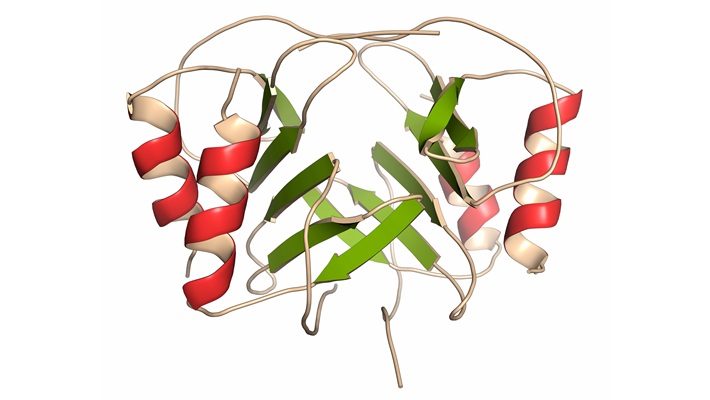
Using advanced nuclear magnetic resonance (NMR) spectroscopy, the team mapped conformational states of PF4 and pinpointed the switch that toggles between harmless and pathogenic shapes. The researchers then demonstrated that altering this control point can keep PF4 in its closed form, markedly reducing its capacity to elicit an immune response. The work integrated biophysics, structural biology, transfusion medicine, and platelet immunology to connect atomic‑level protein behavior with clinical complications observed in patients.
The findings were published on September 11, 2026, in Nature Communications. According to the investigators, the newly defined PF4 switch, coupled with access to state‑of‑the‑art NMR facilities, may provide a foundation for developing more precise diagnostic tests that identify pathogenic antibodies earlier and more accurately. They also noted that the approach serves as a proof of concept for interrogating subtle but functionally critical protein dynamics in other diseases.
“This study provides a molecular explanation for how PF4 becomes a pathogenic antigen. By identifying the structural switch that controls this process, we've revealed a new way of thinking about how to detect or prevent these dangerous immune reactions,” said Giuseppe Melacini, of the Departments of Chemistry and Chemical Biology and Biochemistry and Biomedical Sciences at McMaster University.
“This work shows the power of collaboration across disciplines. By combining advanced molecular imaging approaches with clinical expertise, we were able to answer a longstanding question about what causes PF4 to become a target of harmful antibodies,” stated Ishac Nazy, of the Michael G. DeGroote Centre for Transfusion Research and the Departments of Medicine and Biochemistry and Biomedical Sciences at McMaster University.
Related Links
McMaster University