


Single-Cell Test Predicts Chronic Myeloid Leukemia Treatment Response in Hours
Posted on 25 Nov 2026
Chronic myeloid leukemia (CML) is a blood cancer commonly treated with daily tyrosine kinase inhibitor tablets. Although most patients respond well, approximately 30% to 40% eventually need to switch medications due to side effects or an inadequate treatment response. Treatment effectiveness is typically monitored through blood tests every three months, meaning an insufficient response may go undetected for months. New findings suggest that treatment response could be predicted within hours of the first dose, potentially enabling earlier identification of patients who may benefit from alternative treatments.
Researchers at the University of Bergen and Haukeland University Hospital in Bergen, Norway, led a study using single-cell profiling to evaluate early treatment response in patients with chronic myeloid leukemia (CML). The approach involved analyzing individual blood cells before treatment and shortly after the first dose of medication. Researchers focused on changes in molecular signaling within leukemia and immune cells following exposure to the tyrosine kinase inhibitors dasatinib or nilotinib.
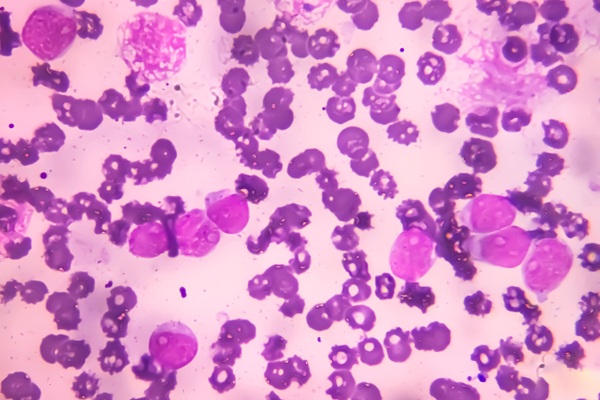
The team used mass cytometry, a technique capable of measuring more than 40 proteins in each individual cell. This enabled the identification of 37 blood and immune cell types and the molecular signaling pathways active within them. In total, the analysis covered approximately 44 million cells obtained from patients and healthy volunteers.
The study included blood samples from 81 newly diagnosed patients enrolled in two clinical trials: NordCML007, conducted by the Nordic CML Study Group, and the European ENEST1st trial sponsored by Novartis. Samples were collected before patients received their first tablet and again when each drug reached its peak concentration in the bloodstream. This occurred one hour after administration of dasatinib and three hours after administration of nilotinib.
Within hours of treatment, both drugs markedly reduced overactive molecular signaling in leukemia cells, including rare stem-cell-like leukemia cells. Using these early changes, researchers developed a machine-learning model that combined individual patient measurements into profiles capable of predicting how much leukemia would remain in the blood after 12 months. The resulting predictions performed as well as or better than the risk score used at diagnosis.
The strongest predictors of treatment response differed between the two drugs. For dasatinib, the most informative factors were initial leukemia burden and the activity of T cells and natural killer cells. For nilotinib, the strongest predictors involved cell survival and cell-death signaling in rare stem-cell-like leukemia cells. The findings were published in Signal Transduction and Targeted Therapy on November 18, 2026, with the research involving collaborators from six countries, including Stanford University.
The researchers emphasized that the findings require validation in larger, independent patient cohorts before the approach can be adopted in routine clinical practice. They also noted that mass cytometry is primarily available in specialized laboratories and proposed developing a simplified test compatible with conventional flow cytometers used at university hospitals treating CML. The findings will inform SWITCH, an upcoming clinical trial in Bergen that aims to use early single-cell measurements to guide treatment selection in real time.
“Today, patients and doctors have to wait months to learn whether a treatment is working. Our results show that important clues are already in the blood within hours of the first tablet. Single-cell profiling like this could become a next-generation white blood cell count—a test as precise as the targeted drugs it guides,” said Stein-Erik Gullaksen, postdoctoral fellow at the University of Bergen and Haukeland University Hospital.
Related Links
University of Bergen
Haukeland University Hospital