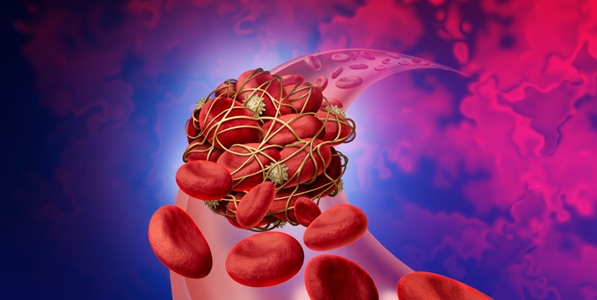
Childhood Hereditary Spherocytosis Confirmed by Hematology Analyzer
By LabMedica International staff writers
Posted on 26 Feb 2015
The hallmark of hereditary spherocytosis (HS) is a decreased surface area-to-volume ratio of the erythrocytes (RBC), resulting in the characteristic spherocyte form and in a blood film, spherocytes have a smaller diameter than normal RBC and are hyperchromic.Posted on 26 Feb 2015
The flow cytometric eosin-5′-maleimide test (EMA) is highly sensitive and specific for HS as a confirmatory method and the utility of hyperchromic erythrocytes in HS screening and evaluation of the EMA test performed on a hematology analyzer was compared with the reference method.
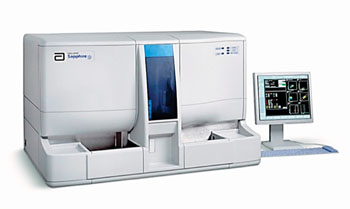
Image: The CELL-DYN Sapphire hematology analyzer (Photo courtesy of Abbott Diagnostics).
Hematologists at Our Lady's Children's Hospital (Crumlin, Dublin, Ireland) analyzed blood samples from 740 pediatric patients presenting at their institution in the reticulocyte mode of the CELL-DYN Sapphire hematology analyzer (Abbott Diagnostics; Wiesbaden-Delkenheim, Germany) to obtain hyperchromic erythrocyte counts. The EMA test used as a reference for the laboratory diagnosis of HS was performed on a FACSCanto II flow cytometer (Becton Dickinson; San Jose, CA, USA).
Hyperchromic erythrocytes were the highest in patients with HS (median 11.5%; range 5.1 to 29.2%). Patients with autoimmune hemolytic disease had significantly less hyperchromic erythrocytes (median 4.9%; range 0.0 to 18.3%). Hyperchromic erythrocytes showed a high area under the receiver operating characteristic (ROC) curve of 0.972. At 4.9% cut-off, hyperchromic erythrocytes detected HS with 96.4% sensitivity and 99.1% specificity. The EMA test on CELL-DYN Sapphire correlated strongly with the reference test and had identical diagnostic power. Stability studies with blood from HS patients showed a significant decrease in hyperchromic erythrocytes after six hours of storage.
The authors concluded that measurement of hyperchromic erythrocytes is highly sensitive and specific for detecting HS and can be used for rapid and inexpensive screening. If required, the EMA test can be performed on the CELL-DYN Sapphire or a standard flow cytometer for confirmation of HS. The study was published in the February 2015 issue of the International Journal of Laboratory Hematology.
Related Links:
Our Lady's Children's Hospital
Abbott Diagnostics
Becton Dickinson




Platinum Member

Automated Coagulation Analyzer
Hemolumi H6

Manual Pipetting Aid
Pipette Controllers macro
Gold Member

Electrolyte Analyzer
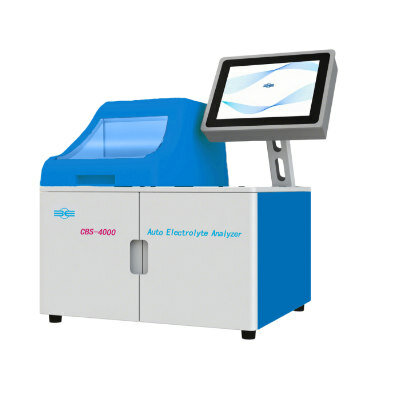
CBS-4000 (CBS-400)