Head-to-Head Study Compares Blood Tests for Early Alzheimer’s Disease Detection
Posted on 18 Aug 2026
Accurate, scalable diagnostics are becoming increasingly important as disease-modifying therapies reshape Alzheimer’s disease care, yet many patients still rely on invasive cerebrospinal fluid sampling or costly positron emission tomography (PET) to confirm amyloid pathology. Blood-based biomarkers, particularly plasma phosphorylated tau at threonine 217 (p-tau217), offer a simpler alternative, but the growing number of commercial assays makes performance difficult to compare. Clinical teams therefore need clarity on which tests perform reliably in routine practice and whether results are consistent across platforms. New findings show how leading p-tau217 assays compare in a prospective, multicenter head-to-head evaluation.
Researchers at the University of Science and Technology of China reported results from the Clinical Evaluation of Blood-Based Tests for the Rapid Identification of Amyloid Pathology in AD (CLEAR-AD) study. Investigators evaluated nine commercially available plasma p-tau217 assays spanning three analytical platforms, with all samples processed in a central laboratory to minimize preanalytical variability. Diagnostic performance was benchmarked against brain amyloid PET status.
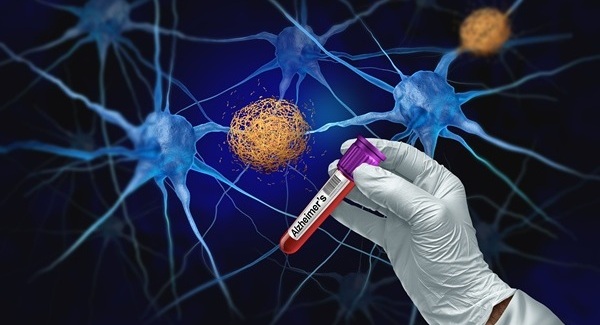
Plasma p-tau217 is being developed as a noninvasive alternative to spinal taps and PET for identifying Alzheimer’s-related pathology. By measuring p-tau217 in blood, these assays estimate the likelihood of amyloid positivity in a format that is more practical for routine clinical use. However, the study shows that assays targeting the same biomarker can differ substantially in diagnostic performance and should not be assumed to be interchangeable.
CLEAR-AD enrolled 431 participants from 10 memory clinics across China, including cognitively unimpaired individuals, people with mild cognitive impairment (MCI), and patients with dementia. All participants underwent amyloid PET, providing a consistent reference standard for evaluating assay accuracy. Centralized sample processing enabled a controlled comparison across the different platforms.
Seven of the nine assays demonstrated strong accuracy for detecting amyloid PET positivity, while two showed substantially lower diagnostic discrimination. The authors emphasize that platform-specific calibration is essential before clinical implementation and caution against treating all p-tau217 assays as a single interchangeable category. A two-cutoff rule-in/rule-out strategy maintained a high degree of diagnostic certainty for the best-performing assays while limiting indeterminate results to a relatively small group. Adding plasma amyloid-beta to form a biomarker ratio improved classification only in selected subgroups, including individuals with MCI.
Externally derived cutoffs from manufacturers or previous studies also performed variably in this independent cohort, reinforcing the need to calibrate thresholds for the intended clinical population and setting. Overall, the findings support integrating high-performing plasma p-tau217 assays into Alzheimer’s diagnostic workflows to accelerate evaluation of suspected disease, provided that platform-specific calibration and standardized testing protocols are in place. The findings were published online in Science Bulletin on August 5, 2026.





.jpg)