EBV Status Helps Predict Survival in Primary CNS Lymphoma
Posted on 07 Jul 2026
Primary central nervous system lymphoma is a rare malignancy in which tumors arise in the brain and, less often, the spinal cord, eyes, or cerebrospinal fluid. Outcomes are especially variable when the disease occurs in people with immunodeficiency, complicating both imaging interpretation and treatment planning. Until now, evidence to guide risk stratification has been limited by small patient cohorts. A new multicenter study identifies virus-associated imaging features and introduces a simple three-factor model to help predict outcomes in immune-related primary CNS lymphoma.
Heidelberg Faculty of Medicine at Heidelberg University and the German Cancer Research Center (DKFZ), working through the International Primary CNS Lymphoma Collaborative Group, evaluated a three‑factor prognostic model for immunodeficiency‑associated primary CNS lymphoma (ID‑PCNSL). The model integrates Epstein–Barr virus (EBV) detection in tumor tissue, patient age, and performance status to stratify risk and estimate survival. The study also delineates Epstein-Barr virus–linked MRI enhancement patterns that differ between EBV‑positive and EBV‑negative tumors.
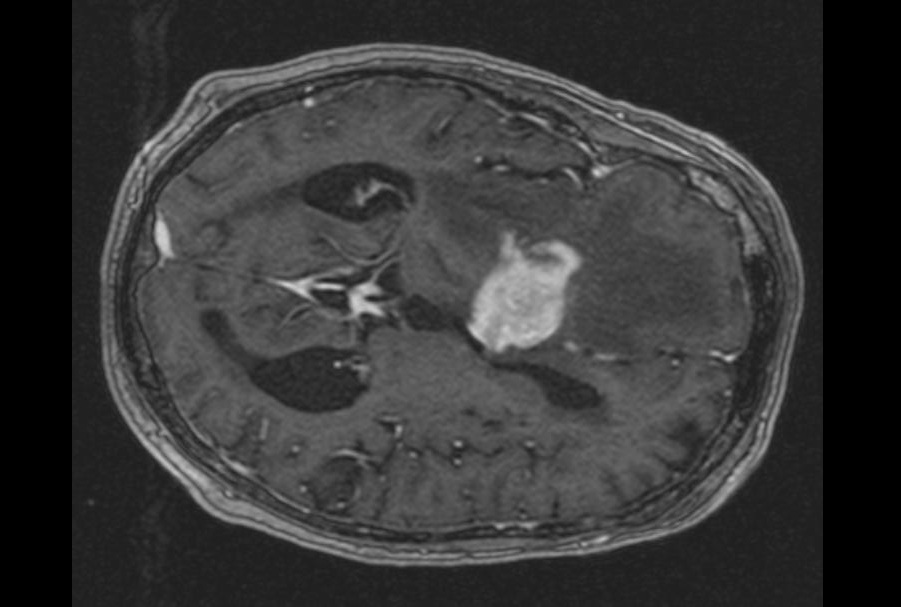
The investigation assembled data from 308 patients treated at 23 hospitals across seven countries, making it the largest study to date in this rare cancer. Researchers analyzed clinical findings, MRI scans, and tumor tissue samples. The findings are published in Blood on July 2, 2026.
EBV was detected in 79.2% of tumors examined. Survival stratification by the three criteria showed clear separation: with one risk factor, median survival was 135 months; with two, it was 29 months; with all three, it was three months. EBV‑positive tumors also demonstrated distinct contrast‑enhancement patterns on imaging compared with EBV‑negative disease.
No standardized therapy has been established for ID‑PCNSL. In the cohort, patients whose immune systems could be at least partially reconstituted—for example through adjustment of immunosuppressive medication or effective treatment of HIV infection—and who additionally received combination chemotherapy with rituximab and methotrexate typically (85%) responded well. In a substantial proportion, the disease remained stable in the long term and became undetectable.
The collaboration underscores that the tumor–immune interplay should be addressed together in care and highlights the importance of large international consortia for rare tumor research.
“Our analyses show that EBV-positive tumors often follow a more aggressive course and are associated with an unfavorable prognosis,” said Leon Kaulen, MD, first author and physician at the Department of Neurology at Heidelberg University Hospital (UKHD), and researcher at the Heidelberg Faculty of Medicine at Heidelberg University and the German Cancer Research Center (DKFZ).
“The prognostic model, with its clear stratification, represents a major advance. It will enable us to assess patients much more precisely in the future and to tailor therapies more effectively to the individual clinical situation,” said Professor Wolfgang Wick, senior author, Heidelberg Faculty of Medicine at Heidelberg University, chair of the Department of Neurology at Heidelberg University Hospital (UKHD), and head of the Clinical Cooperation Unit Neurooncology at DKFZ and UKHD.
Related Links
Heidelberg University
DKFZ
UKHD