Complete Malaria Genomes Could Improve Species Identification and Surveillance
Posted on 16 Nov 2026
Malaria remains a major global health challenge, with an estimated 282 million cases and 610,000 deaths worldwide in 2024. Although most research has focused on Plasmodium falciparum, Plasmodium ovale and Plasmodium malariae also infect millions of people. These neglected species have been difficult to study because long-term laboratory culture methods are not established and existing genetic references have been incomplete. New findings now provide complete genome assemblies generated directly from patient blood samples.
Researchers at the Wellcome Sanger Institute and collaborating institutions developed complete, chromosome-level reference genomes for P. ovale, P. malariae, and P. falciparum directly from natural human infections without laboratory culturing. Blood samples were collected from study participants with malaria in Faladie, Mali, in West Africa. The work involved the Parasites and Microbe Research and Training Center in Mali and other collaborating institutions.
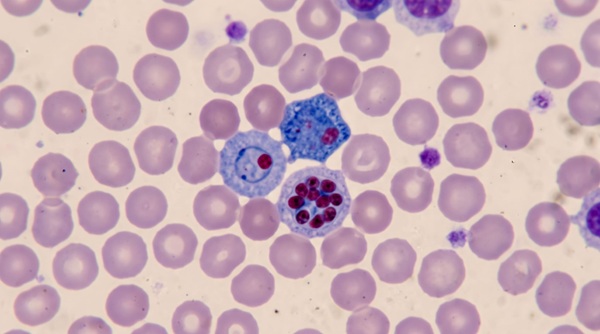
The method used low-input DNA sequencing directly from patient blood. Researchers first increased the proportion of parasite genetic material by filtering out human white blood cells and uninfected red blood cells. They then used long-read sequencing to read large stretches of genetic code from as little as two nanograms of DNA. This was combined with Hi-C, a technique that maps the physical and three-dimensional organization of the genome, to assemble the DNA into complete chromosomes.
The study produced the most complete chromosome-level reference genomes to date for P. ovale and P. malariae, alongside P. falciparum. The approach also resolved previously unmapped chromosome ends containing repetitive DNA regions that encode proteins involved in immune evasion. In P. ovale wallikeri, the PIR gene family was found to contain more than 2,000 genes, accounting for roughly 25% of the parasite genome.
Comparisons across individual patient samples collected in the same region and during the same period also revealed extensive DNA recombination at chromosome ends. The findings were published November 12 in PLOS Pathogens. According to the study, these reference genomes could support more accurate molecular surveillance, analysis of parasite genetic diversity and malaria transmission, and discovery of therapeutic targets, while helping incorporate non-falciparum malaria parasites into broader elimination strategies.
"As our study draws on parasites sampled directly from patient infections, it reflects the genomic diversity of parasite populations as they actually occur in hosts in an endemic setting. Uncovering these full genomes revealed the extent of expansions of gene families sitting at the ends of chromosomes, which regularly shuffle genetic material to adapt and evade the human immune system," said Dr. Sunil Dogga, first author formerly at the Wellcome Sanger Institute and now senior scientific collaborator at the Swiss Tropical and Public Health Institute.
“This milestone was only possible thanks to the long-standing international collaboration between our team in Mali and the genomic expertise at the Sanger Institute. The genomes developed through this partnership provide an essential toolkit for improving species identification across West Africa,” said Professor Abdoulaye Djimdé, honorary faculty at the Wellcome Sanger Institute and director of the Parasites and Microbes Research and Training Center, Mali.
Related Links
Wellcome Sanger Institute