Serum Cortisol Predicts Death and Critical Disease
By LabMedica International staff writers
Posted on 12 Dec 2012
Several biomarkers and prognostic scores have been evaluated to predict prognosis in community-acquired pneumonia (CAP). Posted on 12 Dec 2012
Serum cortisol concentration is associated with severity and mortality and predicts persistent clinical instability, making it a potential parameter to improve the identification of patients with high risk for a complicated disease course.
Scientists at the University Hospital Carl Gustav Carus (Dresden, Germany) studied 984 hospitalized CAP-patients and measured their serum cortisol concentrations and compared its prognostic accuracy to the leucocyte count, C-reactive protein levels, and the clinical prediction CRB-65 score. Serum cortisol was analyzed by a chemiluminescence immunoassay (Roche Diagnostics; Mannheim, Germany). This assay has a measurement range of 0.5 to 1,750 nmol/L; higher concentrations were analyzed by dilution of the serum sample.
Serum cortisol levels on admission were significantly higher in nonsurvivors at a median of 870 nmol/L when compared to survivors at 602 nmol/L. In patients with critical pneumonia the median was 972 nmol/L compared with a median 598 nmol/L in patients with noncritical pneumonia. In subgroup analyses, cortisol independently predicted critical pneumonia when compared to procalcitonin levels.
A causative microbiological pathogen was detected in 195 patients (20%). Of these, typical bacteria were found in 84 patients (43%), atypical bacteria in 64 (33%), viruses in 29 (15%) and mixed infection in 18 (9%). Streptococcus pneumoniae was the most frequently isolated pathogen and was found in 71 patients (36%).
The authors concluded that cortisol predicts mortality and critical disease in hospitalized CAP-patients independently of clinical scores and inflammatory biomarkers. They recommend that it should be incorporated into trials assessing optimal combinations of clinical criteria and biomarkers to improve initial high-risk prediction in CAP. The study was originally published in April 2012 in the Biomedical Central Journal BMC Infectious Diseases.
Related Links:
University Hospital Carl Gustav Carus
Roche Diagnostics



Gold Member

Quantitative POC Immunoassay Analyzer
EASY READER+


HPV Test
Allplex HPV28 Detection
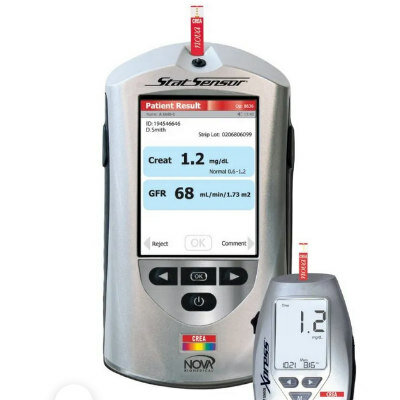

Creatinine/eGFR Meter
StatSensor® Creatinine/eGFR Meter