Point-of-Care Blood Test Could Speed Treatment Decisions in Acute Stroke
Posted on 30 Sep 2026
Minutes can shape treatment decisions in emergency stroke care, particularly when physicians need to know whether a patient is taking anticoagulants before administering clot-dissolving therapy. Even when blood samples are rushed to the laboratory, results can take up to an hour, delaying time-sensitive decisions. Researchers have now developed a bedside blood test that can measure drug concentrations in under 10 minutes and support faster treatment decisions.
Aarhus University’s (Aarhus, Denmark) Department of Chemistry developed the point-of-care system, which combines a small disposable cassette with a compact optical reader. A blood sample is applied directly to the cassette without prior treatment. Inside the cassette, an integrated filter retains blood cells while allowing plasma to flow into a measurement chamber.
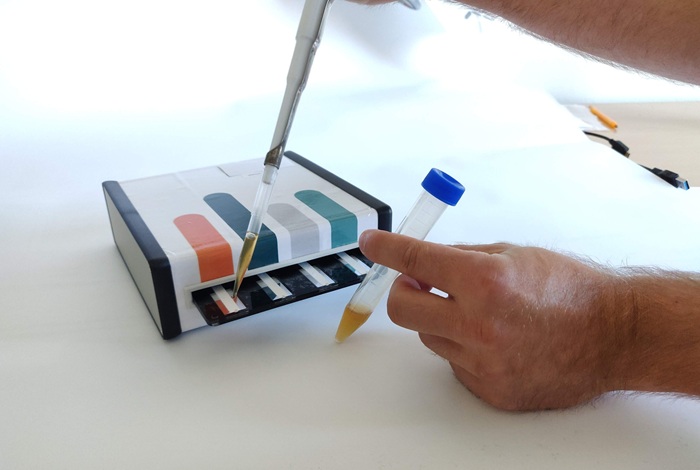
The method uses pre-dried chemical and biological reagents embedded in the filter. When plasma reaches the filter, these reagents dissolve and initiate the reaction. Specific antibodies and optical measurement technology then generate a signal that the reader analyzes to automatically calculate the precise drug concentration.
The technology was evaluated using blood samples from 52 patients treated at hospitals in Denmark and abroad. Results closely matched those from traditional central laboratory instruments, while reducing analysis time to under 10 minutes and eliminating the need for centrifugation or manual laboratory processing.
The study focused initially on three anticoagulants: dabigatran, rivaroxaban, and apixaban. It also tested the cancer drug methotrexate and the antibiotic linezolid. The work was published in ACS Sensors under the title “A Point-of-Care System for the Quantification of Small-Molecule Drugs in Blood.” MedicQuant, a spinout company founded in 2019, is further developing and manufacturing the technology.
The developers said the compact instrument could be placed in smaller hospitals or local clinics, reducing the need to transport patients or samples over long distances for urgent testing. They also indicated that the approach may be applicable to other critical drug measurements, including immunosuppressive medicines and antibiotics. The main challenges described were bringing the technology into practical use, maturing the market, and adapting clinical workflows.
“Time is everything when dealing with a stroke. The longer an area of the brain goes without oxygen, the higher the risk of tissue death and brain damage. Therefore, acting quickly is vital, and this solution can shave off crucial minutes and provide a significantly better outcome for the patient,” said Kurt Vesterager Gothelf, chemistry professor and head of the research group.
Related Links
Aarhus University