Urine-Based Test Shows Promise for Autism Screening in Children
Posted on 29 May 2026
Autism spectrum disorder (ASD) is commonly diagnosed through behavioral assessments, which can involve long waits that delay intervention. Earlier identification is linked to better developmental outcomes, yet accessible biologically based screening tools remain limited. In the United States, ASD affects an estimated one in 31 children, underscoring the need for scalable screening options. Researchers now describe a urine-based approach that detects microbially derived metabolites associated with ASD in children ages 2 to 11.
Arizona State University (Tempe, AZ, USA) scientists and collaborators developed the Microbially-Derived Metabolite (MDM) System, a urine screening tool that quantifies 17 metabolites produced by the gut microbiome. The system assigns a score based on the number of metabolites that exceed typical reference ranges in an individual child’s urine. Several of the measured compounds are linked to pathways of the amino acids tyrosine, tryptophan, and phenylalanine, as well as metabolites associated with yeast and fungal activity.
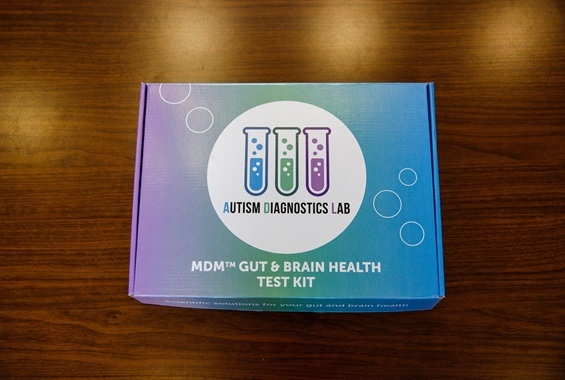
In the study, investigators measured concentrations of microbially derived metabolites in urine from 52 children with ASD and 47 typically developing children, all between 2 and 11 years of age. Participants were enrolled across four U.S. locations—Arizona, Massachusetts, Tennessee, and Texas. The analysis identified distinct metabolite patterns that differentiated the ASD group from controls.
The test achieved 90% sensitivity and 100% specificity in distinguishing ASD from typically developing children within the study cohorts. Nearly all children with ASD had at least one metabolite exceeding the highest level observed in controls, and children with ASD had an average of about three elevated metabolites. The authors note that additional confirmation is underway to further validate accuracy due to the study’s moderate sample size.
Based on the biochemical profile, they propose a subtype termed “ASD associated with microbially-derived metabolites” (ASD-MDM), which they estimate may encompass about 90% of ASD cases, while approximately 10% did not show abnormal gut metabolites and most of those had other major metabolic problems possibly linked to genetic disorders.
The research was published in Molecular Psychiatry on May 26, 2026. The work involved the Biodesign Center for Health Through Microbiomes and the Ira A. Fulton Schools of Engineering at Arizona State University, including the School of Engineering of Matter, Transport and Energy. While not a stand-alone diagnostic, the authors suggest the urine test could help triage children for earlier evaluation, with further studies planned to validate the approach in larger and more diverse populations.
“What we’ve discovered is that 80 to 90% of children with autism have extremely high levels of one or more microbially derived metabolites. Using this test will tell you which young children are at high risk of being diagnosed with autism, and guide treatment in those who have already been diagnosed to help them lead their best lives,” said Christina Flynn, first author of the study and research director for the CLIA-certified Autism Diagnostics Laboratory.
“What’s really striking about the bacteria is that they make metabolites that are basically altered versions of serotonin and dopamine. These are two key neurotransmitters that affect mood, cognition and memory. This could explain many of the symptoms and co-occurring symptoms in children with autism—their social communication, anxiety, depression and attention,” said James Adams, corresponding author and researcher with the Biodesign Center for Health Through Microbiomes at Arizona State University.
"We think reducing the levels of these metabolites may help these children lead healthier and happier lives, and we encourage children to be screened sooner to receive earlier interventions," said Adams, also with the School of Engineering of Matter, Transport and Energy, part of the Ira A. Fulton Schools of Engineering.
Related Links:
Arizona State University
ASU Biodesign Institute