Blood-Based Sensor Detects Early Signs of Alzheimer’s and Parkinson’s
Posted on 27 May 2026
Alzheimer’s disease and Parkinson’s disease are increasing as populations age, yet diagnosis remains largely symptom-driven and often occurs after irreversible brain damage has begun. Earlier detection, ideally through a simple blood test suitable for preventive screening, remains a major clinical priority. By identifying disease-specific protein misfolding in peripheral blood, clinicians may be able to detect pathology before insoluble deposits form.
At Ruhr University Bochum (Bochum, Germany), investigators developed an immuno-infrared sensor platform designed to capture disease-related biomarkers from body fluids and assess their structural state. The test targets amyloid beta (Aβ) for Alzheimer's disease and alpha-synuclein (α‑Syn) for Parkinson's disease, using antibody-based capture to enrich the proteins of interest. By directly probing folding status, the approach aims to detect neurodegenerative processes well before overt clinical symptoms emerge.
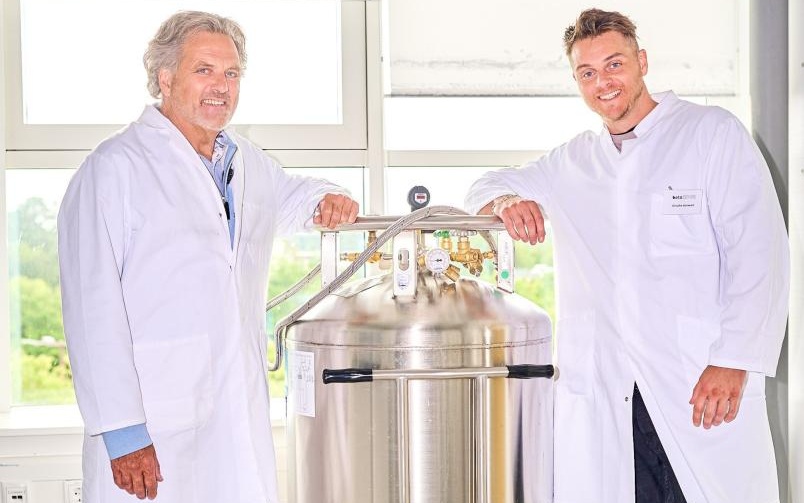
According to the team, misfolding is quantified by modern infrared spectroscopy powered by highly sensitive quantum cascade laser technology. A patented surface chemistry immobilizes the specific antibodies on the sensor, while a dedicated blocking layer minimizes nonspecific adsorption. This configuration enables difference spectroscopy to isolate the secondary‑structure–specific infrared signature of the captured biomarker from the complex background of blood or other body fluids. The group notes that combining molecular biology, biophysics, and laser spectroscopy underpins these measurements and supports scalability through parallel readouts.
The work is featured as a cover story in the April 24, 2026, issue of The Journal of Physical Chemistry B. The immuno-infrared sensor is already being used in clinical studies by BetaSENSE, which provides contract research services for the pharmaceutical industry, including work involving a Parkinson’s disease vaccine. For the blood test to become available as an early detection tool for the general public, approval under the European IVDR Regulation will be required, and the company is working to advance that process.
Related Links
Ruhr University Bochum
betaSENSE