Liquid Biopsy Biomarkers May Improve Childhood Epilepsy Diagnosis
Posted on 28 May 2026
Childhood epilepsy remains a major neurological disorder with unmet needs for accurate, non-invasive biomarkers, as conventional tests such as electroencephalography and neuroimaging can have limited sensitivity and specificity. Reliable blood-based signatures could also support longitudinal monitoring in clinical settings. A new study identifies patterns in blood-based extracellular vesicles as a non-invasive signal that can help diagnose childhood epilepsy and distinguish between focal and generalized forms.
The study, published on February 17, 2026, in Engineering, evaluates whether profiling the N-glycome of serum-derived extracellular vesicles (EVs) can support childhood epilepsy diagnosis. EVs are non-replicating, lipid-bound particles released by cells into body fluids, where they reflect physiological and disease processes and serve as promising liquid biopsy biomarkers. The N-glycome refers to the full set of N-linked glycans, complex carbohydrate structures attached to proteins that help regulate protein folding, function, and cellular interactions. Because glycan patterns are closely tied to immune activity and disease progression, they may also provide disease-specific clues in neurological disorders.
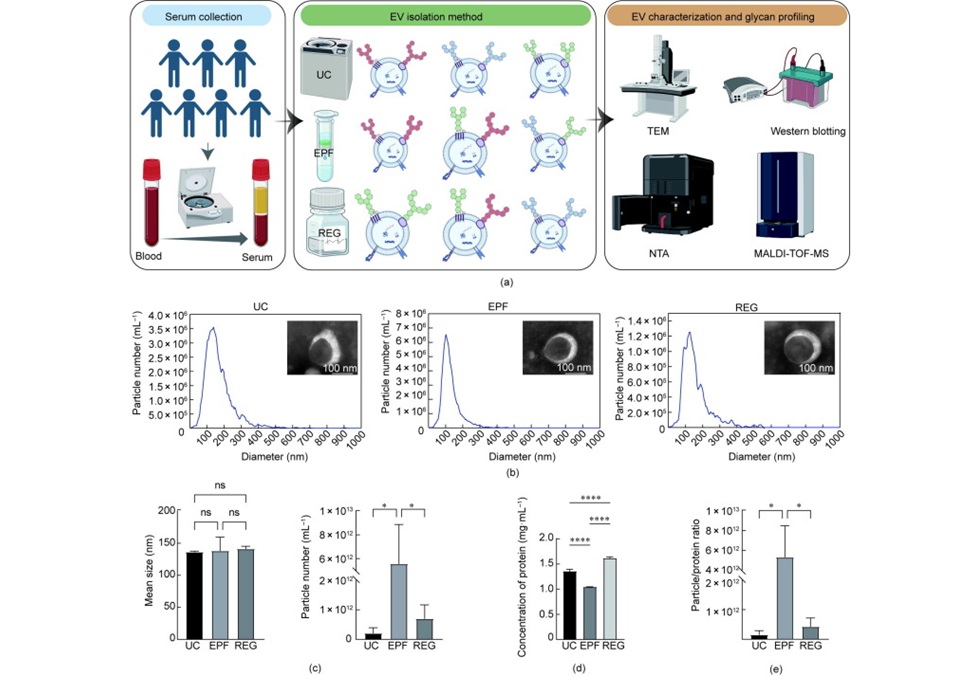
To enable robust glycomic analysis at clinical scale, researchers systematically compared three EV isolation workflows: differential ultracentrifugation, reagent precipitation, and a combined exosome purification filter column with ultrafiltration (EPF/UF). EPF/UF demonstrated the most suitable performance for large-scale clinical serum samples. Using matrix-assisted laser desorption ionization time-of-flight mass spectrometry (MALDI-TOF-MS), the team profiled N-glycans from both EVs and paired serum, revealing distinct glycosylation patterns between the two sample types.
A two-step machine learning framework identified 47 characteristic EV-derived N-glycans that distinguished healthy controls from children with epilepsy and further separated focal from generalized epilepsy. In direct comparisons, EV-derived N-glycans outperformed serum N-glycan profiles across random forest, XGBoost, logistic regression, and multilayer perceptron models. The researchers also built a glycan correlation network showing EV glycosylation changes during epileptogenesis and linking glycan remodeling to disease-related processes.
The investigators reported that EV-associated glycans are protected within lipid bilayers and can cross the blood-brain barrier, properties that may reduce interference from abundant serum proteins and contribute to stability and specificity. According to the study, next steps will focus on functional validation of the identified glycan signatures and expansion to more diverse cohorts to advance clinical translation. The authors note that this line of work could help enable improved non-invasive diagnosis and therapeutic monitoring in pediatric epilepsy care.