Low Sugar Metabolite Associated with Disability, Neurodegeneration in MS
By LabMedica International staff writers
Posted on 27 May 2021
N-glycan branching modulates cell surface receptor availability, and its deficiency in mice promotes inflammatory demyelination, reduced myelination, and neurodegeneration. N-acetylglucosamine (GlcNAc) is a rate-limiting substrate for N-glycan branching. Posted on 27 May 2021
However, endogenous serum GlcNAc levels in patients with multiple sclerosis (MS) are unknown. MS is characterized by recurrent episodes of neurologic dysfunction resulting from acute inflammatory demyelination. Progressive MS (PMS) is distinguished by continuous inflammation, failure to remyelinate, and progressive neurodegeneration, causing accrual of irreversible neurologic disability.
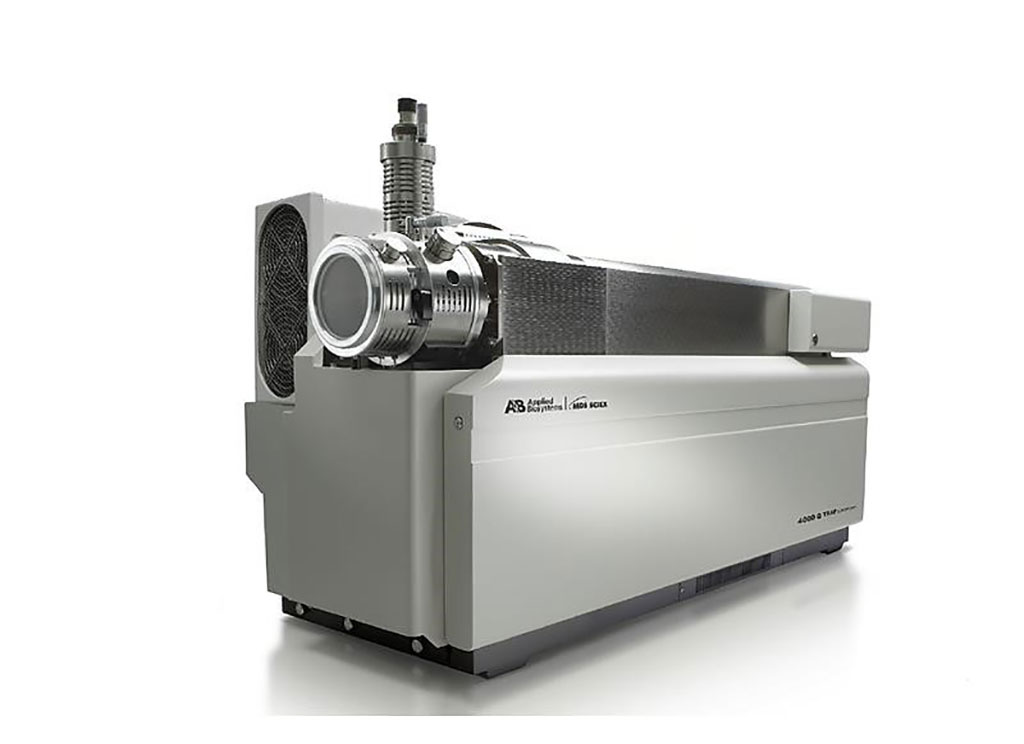
Image: AB Sciex 4000Qtrap quadrupole mass spectrometer (Photo courtesy of Sciex)
Neurologists at the University of California, Irvine (Irvine, CA, USA) and their international colleagues conducted a cross-sectional discovery study and cross-sectional confirmatory study at two academic MS centers in the USA and Germany. The discovery study recruited 54 patients with MS from an outpatient clinic as well as 66 healthy controls between April 20, 2010, and June 21, 2013. The confirmatory study recruited 180 patients with MS from screening visits at an academic MS study center between April 9, 2007, and February 29, 2016. Serum samples were analyzed by triple-quadrupole mass spectrometer (AB Sciex 4000Qtrap, Toronto, ON, Canada).
The scientists reported that in the discovery cohort, the mean ± SD, serum level of GlcNAc plus its stereoisomers (N-acetylhexosamine, HexNAc) was 710 ± 174 nM in healthy controls and marginally reduced in patients with relapsing-remitting MS (RRMS) level was 682 ± 173 nM, whereas patients with PMS displayed markedly reduced levels was 548 ± 101 nM compared with healthy controls, and patients with RRMS. The difference between patients with RRMS, 709 ±193 nM and those with progressive MS was 405 ±161 nM, was confirmed in the independent confirmatory cohort. Lower HexNAc serum levels correlated with worse expanded disability status scale scores and correlated with a greater percentage of brain volume loss at 18 months.
Alexander Brandt, MD, adjunct associate professor of neurology and first author of the study, said, “Lower GlcNAc serum marker levels correlated with multiple measures of neurodegeneration in MS, namely worse expanded disability status scale scores, lower thalamic volume, and thinner retinal nerve fiber layer. Also, low baseline serum levels correlated with a greater percentage of brain volume loss at 18 months.”
The authors concluded that their study suggests that deficiency of GlcNAc plus its stereoisomers (HexNAc) may be a biomarker for PMS. Previous preclinical, human genetic, and ex vivo human mechanistic studies revealed that N-glycan branching and/or GlcNAc may reduce proinflammatory responses, promote myelin repair, and decrease neurodegeneration. Combined, the data suggest that GlcNAc deficiency may be associated with progressive disease and neurodegeneration in patients with MS. The study was published on May 10, 2021 in the journal JAMA Neurology.
Related Links:
University of California, Irvine
Sciex




Platinum Member

Automated Coagulation Analyzer
Hemolumi H6
.jpg)
Gold Member

Clinical Chemistry Assay
Sorbitol Dehydrogenase (SDH)
New

Microbiology Laboratory Automation Solution
BD Kiestra™ ReadA+BarcodA
Platinum Member
Integrated Biochemical & Immunological System
Biolumi CX Solution X10+C10