Nano-LCMS Differentiates Liver Diseases
By LabMedica International staff writers
Posted on 24 Sep 2018
Non-alcoholic steatohepatitis (NASH) is among the leading causes of liver disease worldwide. It is increasingly recognized that the phenotype of NASH may involve a number of different pathways, of which each could become important therapeutic targets.Posted on 24 Sep 2018
In addition to the clinical factors associated with adverse outcomes in NASH, a number of studies have assessed histologic features associated with mortality. In this context, the presence of histologic inflammation and ballooning degeneration of hepatocytes can be associated with advanced hepatic fibrosis in patients with NASH, but not mortality.
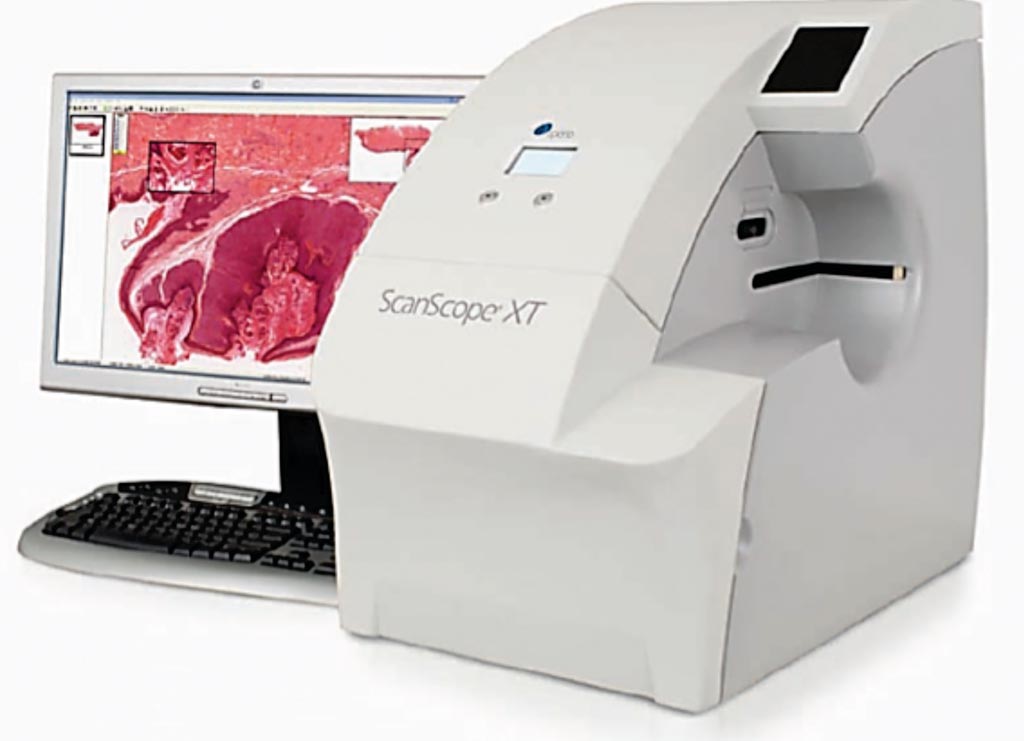
Image: The Aperio Scanscope XT slide scanner (Photo courtesy of University of New South Wales).
Doctors at the Inova Fairfax Hospital (Falls Church, VA, USA) and their colleagues studied a cohort that included 67 obese patients who underwent a liver biopsy for clinical indications. Histological diagnosis was made by the study hepatopathologist and patients were classified into groups: 42 NASH Non-alcoholic fatty liver disease (NAFLD) and 24 non-NASH NAFLD (simple steatosis) or five patients with fibrosis stage ≥ 2) and three fibrosis stage ˂ 2. Blood samples, liver tissue, and demographic and clinical data were collected at the time of liver biopsy.
All liver biopsies were stained with hematoxylin and eosin and Sirius red for steatosis and collagen quantification. Collagen quantification was performed following the acquisition of digitalized images of Sirius stained slides with an Aperio Scanscope XT slide scanner. Serum proteomics were analyzed using liquid chromatography (LC) coupled tandem MS (LC–MS/MS) with an LTQ-Orbitrap mass spectrometer.
The scientists reported that phosphorylated signaling pathways in the liver revealed that apoptosis signal-regulating kinase 1, mitogen-activated protein kinase (ASK1-MAPK pathway involving ASK1 S38 and p38 MAPK) activated by the inflammatory cytokine interleukin (IL-10) were independently associated with higher percentage collagen. LC-MS data revealed that serum alpha-2 macroglobulin (α2M) and coagulation factor V were independently associated with higher percentage hepatic collagen.
The authors concluded that simultaneous profiling of serum proteome and hepatic phosphoproteome revealed that the activation of ASK1 S38, p38 MAPK in the liver, and serum α2M and coagulation factor V are independently associated with hepatic collagen deposition in patients with NASH. These data suggest the role of these pathways in the pathogenesis of NASH-related fibrosis as a potential therapeutic target. The study was published on September 12, 2018, in the journal BMC Medicine.
Related Links:
Inova Fairfax Hospital




Platinum Member

Automated Coagulation Analyzer
Hemolumi H6
Gold Member

Automatic Hematology Analyzer
CF9600
New
Gold Member

Platelet Function Analyzer
PL-12
Electrolyte Analyzer
BKE-B