Biochemical Markers Predict Risk of Incident Diabetes
By LabMedica International staff writers
Posted on 22 Aug 2018
Low osteocalcin and C-telopeptide of type 1 collagen levels in postmenopausal women are associated with an increased risk for insulin resistance and incident diabetes.Posted on 22 Aug 2018
A recent study investigated the relationship of osteocalcin (OC), which is a marker of bone formation, and C-telopeptide of type I collagen (CTX), which a marker of bone resorption, with incident diabetes in older women.
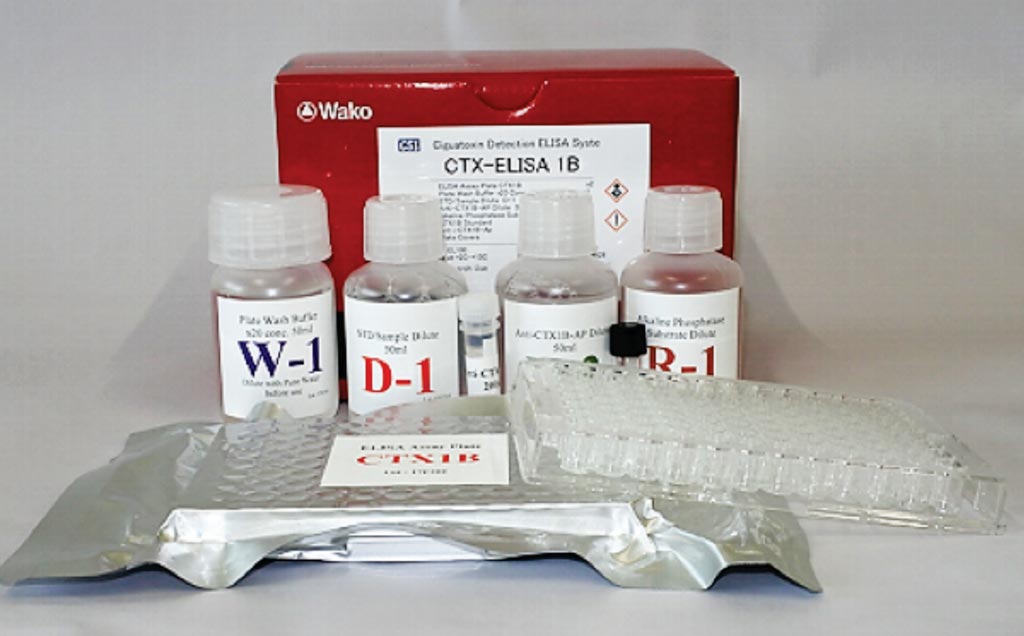
Image: A C-telopeptide of type 1 collagen (CTX) assay kit (Photo courtesy of Wako Chemicals).
A multi-institute team of scientists led by those at the Albert Einstein College of Medicine and Montefiore Medical Center (Bronx, NY, USA) analyzed 1,455 female participants from the population-based Cardiovascular Health Study (mean age 74.6 ± 5.0 years). The cross-sectional association of serum total OC and CTX levels with insulin resistance (HOMA-IR) was examined using multiple linear regressions. The longitudinal association of both markers with incident diabetes, defined by follow-up glucose measurements, medications, and ICD-9 codes, was examined using multivariable Cox proportional hazards models.
The investigators reported that continuous levels of osteocalcin were significantly inversely related to insulin resistance. Continuous C-telopeptide of type 1 collagen levels, though marginally insignificant, showed a similar relationship to insulin resistance. At median follow-up of 11.5 years, 196 cases of incident diabetes were discovered among the participants. After adjustment, both biomarkers still showed inverse associations with incident diabetes (osteocalcin: hazard ratio 0.85 per SD); C-telopeptide of type 1 collagen: hazard ratio 0.82 per SD).
The authors concluded that osteocalcin and C-telopeptide of type 1 collagen are strongly associated with insulin resistance and incident diabetes in late postmenopausal women. The findings also suggest that bone health may be a factor in glucose maintenance in the same postmenopausal demographic. The study was published in the August 2018 issue of the journal Diabetes Care.
Related Links:
Albert Einstein College of Medicine




Platinum Member

Automated Coagulation Analyzer
Hemolumi H6
Gold Member

Nucleic Acid Extractor System
NEOS-96 XT


Automated Clinical Chemistry Analyzer
Envoy 500+
Gold Member

Fully-auto Specific Protein (Nephelometry) Analyzer
PA240