Experts Recommend Fewer Tests for Hospitalized Patients
By LabMedica International staff writers
Posted on 31 Oct 2017
Routine daily laboratory testing of hospitalized patients reflects a wasteful clinical practice that threatens the value of health care. Initiatives from numerous professional societies have identified repetitive laboratory testing in the face of clinical stability as low value care.Posted on 31 Oct 2017
Excessive phlebotomy can lead to hospital-acquired anemia, increased costs, and unnecessary downstream testing and procedures. Efforts to reduce the frequency of laboratory orders can improve patient satisfaction and reduce cost without negatively affecting patient outcomes.
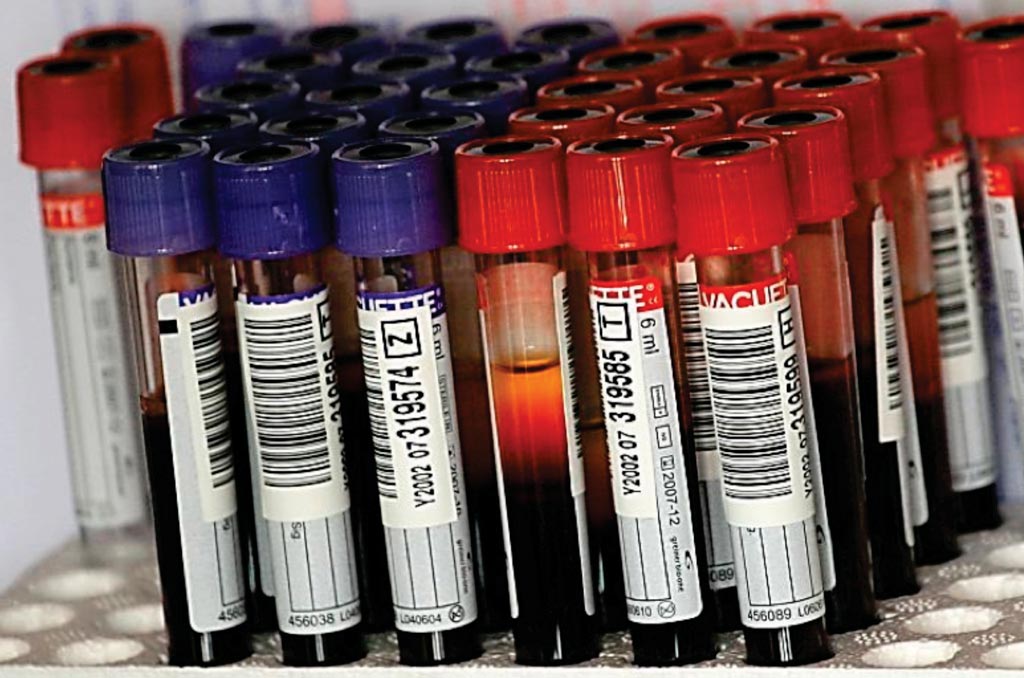
Image: Samples of human blood collected for testing; excessive testing may cause hospital-acquired anemia (Photo courtesy of Rebecca Zeffert).
Physicians at Johns Hopkins School of Medicine (Baltimore, MD, USA) along with experts from several other institutions across North America compiled and crafted an experience-based quality improvement blueprint to reduce repetitive laboratory testing for hospitalized patients. Citing individual studies where front-line health care workers reduced the number of orders for laboratory tests by anywhere between 8% and 19%, the authors reported that cost savings have ranged from USD 600,000 to more than USD 2 million per year.
The experts recommended that it is necessary to design hospital-wide educational initiatives backed by data to collectively outline and standardize best practice. Establish target numbers by which to reduce laboratory test ordering and provide instant feedback to those ordering tests to show their personal ordering patterns, so they are aware of their own behavior with respect to agreed-upon standards. Reprogram the electronic systems used to order tests to restrict the number of "pre-ordered" tests with an eye on having better reasons to order tests than just doing so daily.
To date, numerous interventions have been deployed across multiple institutions without a standardized approach. Health care professionals and administrative leaders should carefully strategize and optimize efforts to reduce daily laboratory testing. Published studies show that decreasing repetitive daily laboratory testing did not result in missed diagnoses or increase the number of readmissions to the hospital.
Kevin P. Eaton, MD, a third-year internal medicine resident and the lead author, said, “Excessive blood draws can deplete a patient's hemoglobin count, which often leads to repeat testing. Others have estimated that nearly 20% of hospitalized patients can develop moderate to severe hospital-acquired anemia. This spiral can generate additional unnecessary tests, interventions and costs for the patient.” The study was published on October 16, 2017, in the journal JAMA Internal Medicine.
Related Links:
Johns Hopkins School of Medicine




Platinum Member

Automated Coagulation Analyzer
Hemolumi H6



POC Immunoassay Analyzer
Procise DX

Gold Member

Platelet Function Analyzer
PL-12