Simple Saliva Test Detects Alzheimer's Disease
By LabMedica International staff writers
Posted on 05 Aug 2015
Early detection of Alzheimer’s related symptoms is critically important for individuals with the disease and for clinical studies seeking to slow or stop disease progression; however, many diagnosis techniques can be costly or invasive.Posted on 05 Aug 2015
Saliva is simple to obtain, easily transportable, and has been successfully used in a variety of diseases and conditions and since multiple samples can be readily obtained, and saliva testing is particularly useful for performing repeated assessments that span days, weeks, months or longer.
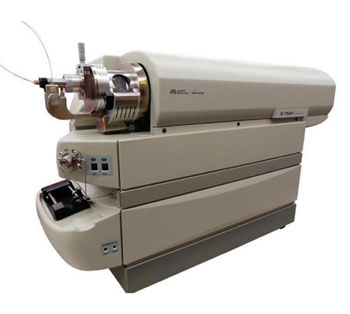
Image: The QTRAP 2000 liquid chromatography-mass spectrometry (LCMS) instrument (Photo courtesy of AB Sciex).
Scientists at the University of Alberta (Edmonton, AB, Canada) used liquid chromatography-mass spectrometry (LCMS) to analyze the saliva samples of 22 participants with Alzheimer's, 25 participants with mild cognitive impairment (MCI), a risk factor for Alzheimer's, and 35 participants with normal cognitive function and normal aging (NA). A validation sample included 10 NA, 10 MCI, and seven participants with Alzheimer’s.
Protein analysis technology, performed on the AB Sciex QTRAP 2000 LCMS (AB Sciex; Foster City, CA, USA), was used to analyze the saliva samples and identify which substances were predominant in the saliva of each of the three types of individuals. The team was able to identify compounds that were more pronounced in the saliva of participants with Alzheimer's and MCI, differentiating them from healthy participants. Further analysis revealed that higher levels of certain substances in participants' saliva were associated with poorer cognitive functioning. For example, a higher level of a certain compound in the saliva of participants with Alzheimer's was linked to slower information processing speed.
Shraddha Sapkota, PhD, a neuroscience graduate and lead author of the study said, “Saliva is easily obtained, safe and affordable, and has promising potential for predicting and tracking cognitive decline, but we're in the very early stages of this work and more studies are needed. Equally important is the possibility of using saliva to find targets for treatment to address the metabolic component of Alzheimer's, which is still not well understood. This study brings us closer to solving that mystery.” The study was presented at the Alzheimer's Association International Conference (AAIC), held July 18–23, 2015, in Washington DC (USA).
Related Links:
University of Alberta
AB Sciex




Platinum Member

Automated Coagulation Analyzer
Hemolumi H6

Gold Member

Flocked Fiber Swabs
Puritan® Patented HydraFlock®

Hematology Consumables
Bioblood Devices
New

Portable POCT Blood Gas Analyzer
BD100