Prenatal Hormone Levels Linked to Gestational Diabetes Risk
By LabMedica International staff writers
Posted on 17 Sep 2013
Overweight women with low levels of the hormone adiponectin prior to pregnancy are nearly seven times more likely to develop gestational diabetes.Posted on 17 Sep 2013
Gestational diabetes, or glucose intolerance during pregnancy, is common and can lead to adverse outcomes including larger-than-normal babies and subsequent delivery complications.
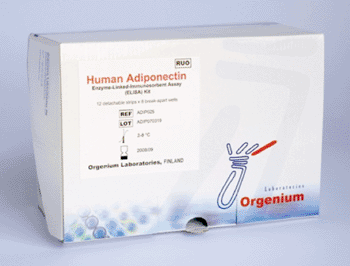
Image: Enzyme linked immunosorbent assay for adiponectin (Photo courtesy of Orgenium).
Scientists at the Kaiser Permanente Northern California (Oakland, CA,USA) retrospectively identified about 4,000 women who gave voluntary blood samples between 1985 and 1996 during routine care and subsequently delivered an infant. Among that group, 256 women developed gestational diabetes during pregnancy and 497 did not.
The investigators examined examine whether circulating total and high–molecular weight (HMW) adiponectin concentrations, measured before pregnancy, are associated with subsequent risk of gestational diabetes mellitus (GDM). They found that normal-weight women with low levels of adiponectin were 3.5 times more likely to develop gestational diabetes than their normal-weight peers with normal levels of the hormone.
Additionally, overweight women with high levels of adiponectin were 1.7 times as likely to develop gestational diabetes during pregnancy, while those with the lowest levels were 6.8 times more likely. The combined effects of having total adiponectin levels below the median of less than 10.29 mg/mL and being overweight or obese were associated with a sevenfold increased risk of GDM compared with normal-weight women with adiponectin levels above the median.
Monique M. Hedderson, PhD, the principal investigator of the study, said, “Our findings indicate important pregnancy interventions may be possible before a woman even conceives. Adiponectin levels are easy and inexpensive to measure and could potentially be used to identify women who are at risk for gestational diabetes." The study was published on August 29, 2013, in the journal Diabetes Care.
Related Links:
Kaiser Permanente Northern California




Platinum Member

Automated Coagulation Analyzer
Hemolumi H6
New
Gold Member

Serum Indices Control
Acusera Serum Indices Control
Gold Member

Blood-Based Protein Biomarker Solution for Alzheimer's Disease
BG-DTi2000.


Hematology Consumables
Bioblood Devices