Home Urine Test Measures Insulin
By LabMedica International staff writers
Posted on 13 Jun 2012
A simple home urine test can determine if patients with type 1 or 2 diabetes are producing their own insulin.Posted on 13 Jun 2012
The urine test can replace multiple blood tests and it can be sent through the mail, as it is stable for up to three days at room temperature because the urine is collected in a container with boric acid.
Doctors at the Peninsula Medical School (Exeter, UK) found that the test could measure endogenous insulin production even if patients receive daily insulin injections. In addition, the test can be used to differentiate type 1 from type 2 diabetes, as well as rare genetic forms of diabetes. This type of differential diagnosis can result in important changes in treatment and the discontinuation of insulin in some patients.
Hepatocyte nuclear factor 1-a (HNF1A)/HNF4A) maturity-onset diabetes of the young (MODY) is commonly misdiagnosed as type 1 diabetes, resulting in the inappropriate treatment with insulin. Serum C-peptide can be beneficial in the diagnosis of MODY, but practical reasons limit its widespread use. C-peptide is a good candidate biomarker to differentiate patients with MODY from type 1 diabetes. C-peptide is a polypeptide cosecreted in equimolar amounts with insulin.
A total of 97 patients with a genetic diagnosis of MODY were recruited; 54 patients with mutations in the HNF1A gene, 23 with HNF4A mutations, and 20 with glucokinase (GCK) mutations. A total of 69 patients with type 1 diabetes were studied, as well as 54 patients with type 2 diabetes. Urinary C-peptide (UCP) was measured by electrochemiluminescence immunoassay on the E170 analyzer and urinary creatinine was analyzed on the P800 platform (Roche Diagnostics; Mannheim, Germany).
The team found that the urinary C-peptide creatinine ratio (UCPCR) is a stable measure of endogenous insulin secretion and a noninvasive alternative to blood tests. Rachel E.J. Besser, MBBS, the senior author of the study said, "The urine test offers a practical alternative to blood testing. As the urine test can be done in the patient's own home, we hope that it will be taken up more readily, and more patients can be correctly diagnosed and be offered the correct treatment."
Related Links:
Peninsula Medical School
Roche Diagnostics




Platinum Member

Automated Coagulation Analyzer
Hemolumi H6
Gold Member

Nucleic Acid Extractor System
NEOS-96 XT
Thyroid Test
Anti-Thyroid EIA Test
New
Alzheimer's Disease Biomarker Assay
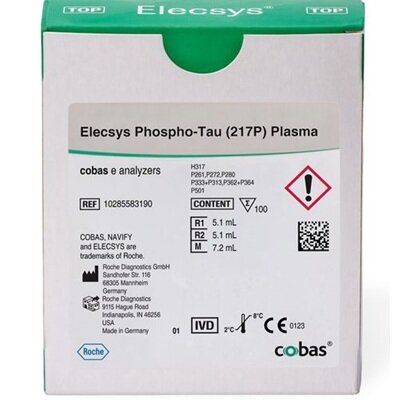
Elecsys Phospho-Tau (217P) Plasma