FDA Clears New Blood Test to Aid in Diagnosis of Mastocytosis
By LabMedica International staff writers
Posted on 30 May 2012
The US Food and Drug Administration (FDA; Silver Spring, MD, USA) has now approved the use of a tryptase assay to provide a more specific diagnostic tool to physicians suspecting cases of systemic mastocytosis. The assay is also pending approval for use in diagnosing systemic anaphylaxis.Posted on 30 May 2012
Mastocytosis, the group of rare chronic disorders found in children and adults, is caused by an excess of mast cells, cells normally vital to the inflammatory process and may play protective roles in wound healing and fighting infections. An abnormal burden of the chemicals released from too many of these cells can cause several symptoms ranging in intensity from mild to severe. The symptoms of mastocytosis are often similar to an allergic reaction; however, mastocytosis may occur spontaneously rather than be triggered by an allergen.
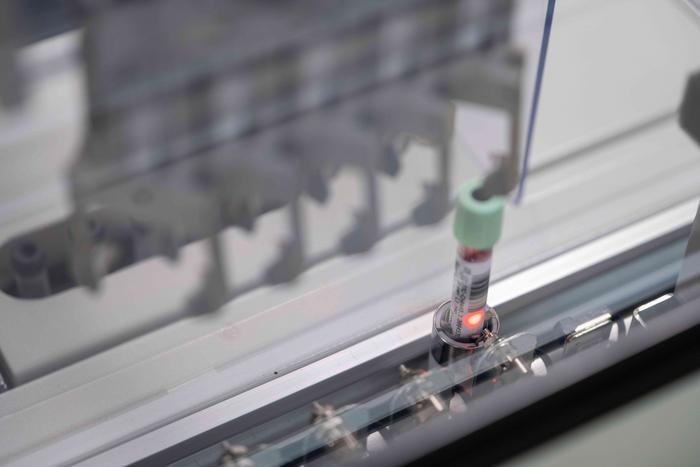
The newly approved test, ImmunoCAP Tryptase, measures the level of tryptase in the blood and provides a biochemical indicator on the basis that a persistently elevated baseline level of tryptase is known to be an indication of possible mastocytosis.
The assay was developed by the laboratory led by mast cell expert Lawrence Schwartz, MD, PhD, at Virginia Commonwealth University (VCU; Richmond, VA, USA). Dr. Schwartz, chair of the Division of Rheumatology, Allergy and Immunology and the Charles and Evelyn Thomas, professor of Medicine at VCU, noted, “A physician cannot diagnose systematic mastocytosis based only on a physical examination. The FDA approval of the tryptase assay will provide doctors with an additional diagnostic tool.”
VCU first licensed the tryptase assay in 1993 to Pharmacia, now named Thermo Fisher Scientific, Inc. (Waltham, MA, USA). The assay is being further reviewed by the FDA for additional potential applications, including diagnosis of systemic anaphylaxis, prediction of increased risk for future episodes of severe anaphylaxis, and use by medical examiners to evaluate cause of death. “When somebody dies without a clear cause, by measuring postmortem tryptase levels, an increased level of tryptase provides support for an anaphylactic event near the time of death,” said Dr. Schwartz.
Related Links:
Virginia Commonwealth University
Thermo Fisher Scientific, Inc.
US Food and Drug Administration




Platinum Member

Automated Coagulation Analyzer
Hemolumi H6
Gold Member

Fully-auto Specific Protein (Nephelometry) Analyzer
PA240

Automatic CLIA Analyzer
Shine i6000
New

Fully Automated Urinalysis System
DxU 1800 Fully Automated Urinalysis System