Lung Biopsies Reduced by Panel of Serum Biomarkers
By LabMedica International staff writers
Posted on 04 Apr 2012
A panel of serum biomarkers could help predict the level of lung cancer risk in high-risk patients, offering doctors an option before proceeding with a biopsy. Posted on 04 Apr 2012
The panel of protein biomarkers could help in lung cancer diagnosis as given the substantial risks of invasive diagnostic thoracic procedures, and unselective biopsy of every person with a small nodule is clinically undesirable.
A multicenter team, led by scientists at the University of Pittsburgh Cancer Institute (PA, USA), identified candidate serum biomarkers in a training set of sera from 56 patients with biopsy-proven primary non-small-cell lung cancer and 56 age-, sex-, and smoking-matched controls. They measured 70 cancer-related proteins by Luminex xMAP multiplexed immunoassays. The classification performance of the 10-biomarker panel was also analytically validated using enzyme-linked immunosorbent assays (ELISA) in a second independent case/control population, further validating the robustness of the panel.
The scientists identified a panel of 10 serum biomarkers including prolactin, transthyretin, thrombospondin-1, E-selectin, C-C motif chemokine 5, macrophage migration inhibitory factor, plasminogen activator inhibitor, receptor tyrosine-protein kinase, cytokeratin fragment 21.1, and serum amyloid A, which distinguished lung cancer patients from controls. The xMAP-multiplexed immunoassays are products of Luminex (Austin, TX, USA).
The ELISA kits for human thrombospondin-1, plasminogen activator inhibitor (PAI-1 and SERPINE1), and macrophage migration inhibitory factor (MIF), are products of R&D Systems (Minneapolis, MN, USA). ELISA kits for carcinoembryonic antigen (CEA), receptor tyrosine-protein kinase 2, and transthyretin (TTR) are manufactured by Immunology Consultants Laboratory, (Minneapolis, MN, USA), Calbiochem (Gibbstown, NJ, USA), and ALPCO (Salem, NH, USA), respectively.
The authors concluded that although the biomarker model they described could not detect every lung cancer, it offers a significant clinical improvement over computed tomography (CT) imaging alone. According to the study, about 20% of the 1-2 cm nodules that are concerning enough to be considered for biopsy are actually malignant, but those who are identified by small pulmonary nodules can be correctly classified by the study's model. The article was published in the April 2012 issue of the Journal of Thoracic Oncology.
Related Links:
University of Pittsburgh Cancer Institute
Luminex
R&D Systems




Platinum Member

Automated Coagulation Analyzer
Hemolumi H6
.jpg)
Gold Member

Clinical Chemistry Assay
Sorbitol Dehydrogenase (SDH)
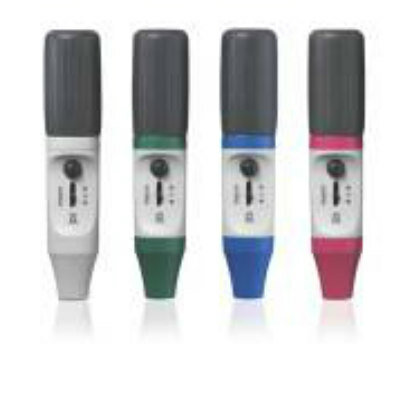

Manual Pipetting Aid
Pipette Controllers macro
New

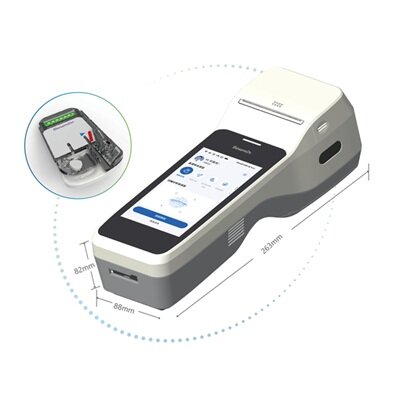
Portable POCT Blood Gas Analyzer
BD100