Immunoassay for Biomarker Predicts Risk of Heart Failure
By LabMedica International staff writers
Posted on 26 Jan 2011
An enzyme-linked immunosorbent assay (ELISA) that measures galectin-3 in human plasma has been used to calculate the risk of heart failure (HF). Posted on 26 Jan 2011
This ELISA assay quantitatively measures the concentration of human galectin-3 levels in EDTA plasma. This assay has high sensitivity with a lower limit of detection of 1.13 ng/mL) and exhibits no cross-reactivity with collagens or other members of the galectin family.
In a study carried out at the University Medical Center Groningen, (UMCG; Groningen, The Netherlands), blood samples were available from 592 heart failure patients during their index admission. Samples were also collected just before discharge when patients were stabilized and there was a mean follow-up of 18 months. Galectin-3 was measured by the ELISA method developed by BG Medicine (Waltham, MA, USA). Levels of cytokines vascular endothelial growth factor (VEGF), interleukin-6 (IL-6), C-reactive protein (CRP), and transforming growth factor-β 1 (TGF-β 1) were measured in the same plasma samples using Search-Light Proteome Arrays (Aushon BioSystems, Billerica, MA, USA).
The investigators reported that the inflammatory markers were positively correlated to galectin-3 levels and the study confirmed that galectin-3 is a strong and independent predictor of adverse outcomes. The prognostic value of the galectin-3 biomarker remained even after adjustment for established risk factors for poor outcomes in HF, including age, sex, brain natriuretic peptide, renal function, and diabetes mellitus. The predictive power of plasma galectin-3 appears to be predominantly strong in heart failure patients with preserved left ventricular ejection fraction, which nowadays comprise about half of all HF patients. Serial measurements of galectin-3 do not appear to add to the prognostic power of single measurements. The details of the study were published in January 2011, in the journal Annals of Medicine.
Related Links:
University Medical Center Groningen
BG Medicine
Aushon BioSystems




Platinum Member

Automated Coagulation Analyzer
Hemolumi H6
Gold Member

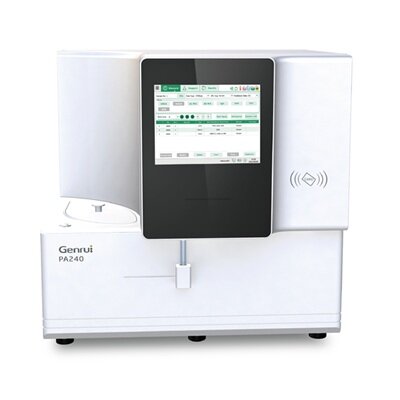
Fully-auto Specific Protein (Nephelometry) Analyzer
PA240

POC Immunoassay Analyzer
Procise DX
New
Gold Member

Serum Indices Control
Acusera Serum Indices Control