Blood Test Predicts Alzheimer Disease Risk Before Imaging Changes and Symptoms
Posted on 15 Apr 2026
Alzheimer's disease often advances silently for years, making timely risk stratification difficult in routine practice. Current approaches to detect pathology can involve lumbar puncture or positron emission tomography (PET) imaging, which are more invasive and costly than blood-based assays. Clinicians also need tools that can anticipate brain changes before abnormalities appear on PET scans to enable earlier monitoring. New findings demonstrate that a plasma pTau217 test can predict future amyloid accumulation and cognitive decline in cognitively healthy older adults.
Mass General Brigham investigators evaluated a blood-based measurement of plasma phosphorylated tau 217 (pTau217), an Alzheimer’s disease biomarker, as an indicator of subsequent neuropathologic change and cognition. The study, published in Nature Communications on April 14, examined whether baseline concentrations and longitudinal changes in pTau217 forecast later trajectories of amyloid deposition, tau pathology, and cognitive performance. The findings suggest a practical path to simpler, earlier prediction of disease progression using a single plasma analyte.
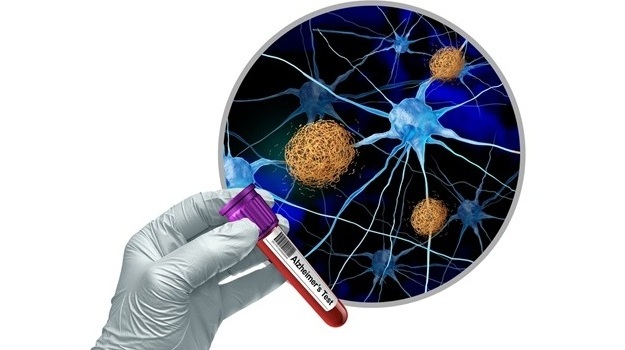
The biomarker reflects Alzheimer’s-related tau biology, with tau accumulation representing the abnormal buildup of misfolded tau proteins inside brain neurons. In this work, higher plasma pTau217 levels were associated with faster buildup of Alzheimer’s pathology even when initial brain scans appeared normal. Increases in pTau217 frequently preceded PET evidence of amyloid positivity, while low baseline pTau217 identified individuals who were very unlikely to accrue significant amyloid-beta over years of observation.
This prospective cohort study followed 317 cognitively healthy adults, aged 50 to 90 years, from the Harvard Aging Brain Study (HABS) for an average of eight years. Participants underwent periodic blood testing for pTau217, repeated amyloid and tau PET imaging, and long-term cognitive assessments. Analyses tested whether baseline status and within-person changes in pTau217 predicted future amyloid accumulation, tau progression, and cognitive decline.
According to the researchers, the results indicate that blood-based biomarkers may enable earlier disease prediction and risk stratification before clear PET abnormalities emerge. They noted potential use as a scalable screening approach for prevention trials and pointed to the possibility that biomarker blood tests could become part of routine health maintenance and offer a more affordable alternative to amyloid PET imaging.
"We used to think that PET scan detection was the earliest sign of Alzheimer's disease progression, revealing amyloid accumulation in the brain 10 to 20 years before symptoms appear. But now we are seeing that pTau217 can be detected years earlier, well before clear abnormalities appear on amyloid PET scans," said Hyun-Sik Yang, MD, a neurologist with Mass General Brigham Neuroscience Institute and an associate member of the Broad Institute of MIT and Harvard.
"As the field is evolving quickly, we're excited to see discoveries on the research side being rapidly translated to clinical application," said co-senior author Jasmeer Chhatwal, MD, Ph.D., a neurologist with Mass General Brigham Neuroscience Institute. "By anticipating who's going to turn amyloid-positive in the future, we are trying to push back the clock to enable earlier Alzheimer's disease prediction."
Related Links
Mass General Brigham