Blood Test Markers Could Help Identify Older Adults at Risk of Disability
Posted on 24 Aug 2026
Maintaining independence into very old age is a growing public health challenge as Japan’s population rapidly ages. Nearly 60% of Japanese adults aged 85 years and older already receive support through the national Long-Term Care Insurance system, yet reliable tools to anticipate disability remain limited. Although routine blood testing is widely available, biomarkers that predict loss of independence in the oldest-old have remained elusive. Addressing this gap, a new study identifies two circulating proteins that are consistently associated with subsequent disability.
Keio University researchers identified beta-2-microglobulin (B2M) and cystatin C as blood-based indicators of future disability in adults aged 85 years and older. Both proteins are associated with kidney function, while B2M also reflects chronic low-grade inflammation, or “inflammaging,” which the researchers link to increased disability risk. Because both analytes are already routinely measured in clinical laboratories, the findings point to readily accessible biomarkers that could support risk stratification in geriatric care.
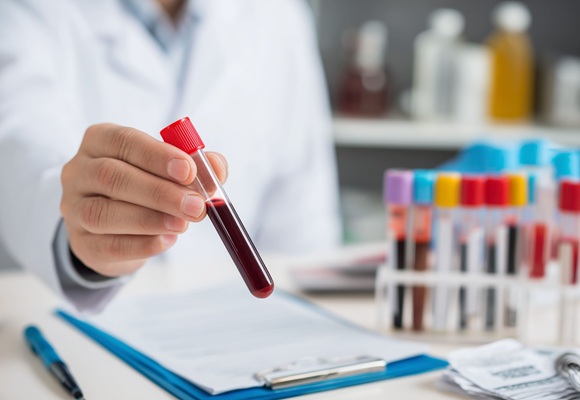
The investigation applied an unbiased, data-driven assessment of circulating proteins in community-dwelling octogenarians. Using machine learning combined with multivariable statistical analyses, the team evaluated 29 plasma proteins for associations with subsequent disability and mortality. The discovery cohort comprised 230 disability-free participants aged 85–89 years from the Kawasaki Aging Well-being Project (KAWP) followed for approximately 4.5 years. Higher baseline concentrations of B2M and cystatin C were consistently linked to a greater likelihood of developing disability.
Each increase in the biomarkers was associated with a significantly higher risk of disability, with hazard ratios of 1.35 for B2M and 1.42 for cystatin C after adjustment for age, sex, kidney function, lifestyle, and other potential confounders. External validation in the Italian Invecchiare in Chianti (InCHIANTI) aging study, with follow-up up to 15 years, again associated elevated B2M and cystatin C with greater disability risk, particularly among participants aged 80 years and older. In contrast, proteins initially associated with mortality, including epidermal growth factor and interferon gamma-induced protein 10, did not replicate in the external cohort, further supporting the robustness of B2M and cystatin C as disability-related markers.
The work was conducted by Keio University with collaborators from the National Institute on Aging, National Institutes of Health (USA). Results were published online in GeroScience on June 27, 2026. The authors state that identifying at-risk individuals earlier could support more proactive, preventive approaches in rapidly aging societies.
“Because B2M and cystatin C are already measurable using standard clinical assays, they have the potential to become practical tools for identifying older adults who may benefit from preventive support,” said Yusuke Osawa, Associate Professor, Graduate School of Health Management, Keio University.
“Our findings suggest that preserving healthy aging requires attention not only to diseases but also to the biological processes that precede disability. Earlier identification of people at higher risk could create opportunities for timely interventions such as exercise, nutritional support, and rehabilitation before irreversible decline occurs,” stated Yasumichi Arai, Professor, Faculty of Nursing and Medical Care, Keio University.
Related Links
Keio University





 Assay.jpg)