Blood Test Enables Early Detection and Classification of Glioma
Posted on 21 Apr 2026
High-grade gliomas, particularly glioblastoma, are fast-growing brain tumors that are often diagnosed late and typically require invasive procedures for confirmation. Current pathways rely on symptoms, magnetic resonance imaging, and surgical biopsies, which can delay treatment decisions and pose significant risk. Early, noninvasive detection remains a major unmet need for neuro-oncology and clinical laboratory practice. Researchers now describe a blood-based approach that identifies aggressive tumors at an earlier stage.
At the University of Sussex, investigators and international collaborators developed a blood test that analyzes small extracellular vesicles (sEVs) in plasma to detect glioma. The assay interrogates the molecular cargo packaged within sEVs—specifically proteins and microRNAs—and integrates these readouts using machine learning algorithms to derive a diagnostic signature. By characterizing a “chemical fingerprint” of circulating biomarkers, the method aims to classify tumor presence and type from a peripheral blood sample.
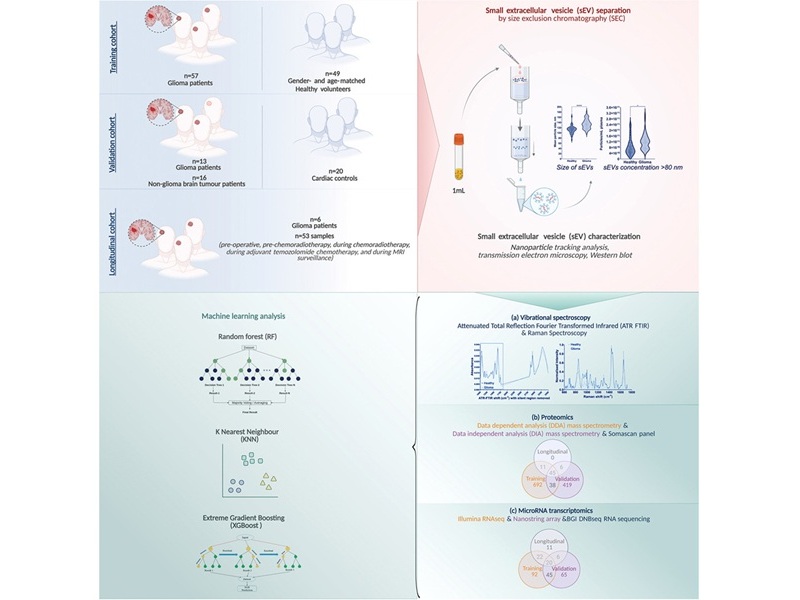
An initial study in 2022 used a small patient group to develop a noninvasive, time‑saving workflow. A subsequent study expanded to a larger cohort comprising glioma patients and healthy volunteers, isolating sEVs from blood plasma and evaluating them with a combination of advanced techniques. In a small longitudinal subgroup, temporal shifts in sEV biomarkers suggested the approach could monitor treatment response over time.
Data analysis showed that samples from glioma patients were consistently distinguishable from those of healthy individuals, enabling creation of a highly accurate test. The method also produced promising discrimination among major glioma subtypes and differentiated gliomas from other brain tumors, a capability important for therapy selection. Findings are published in Cell Reports Medicine on April 17, 2026. Additional analyses drew on glioblastoma cohorts from Genomics England (U.K.), the Neurogenome study biobank (Denmark), and the Dunedin Brain Tumor and HeartOtago databases (New Zealand).
“This is fantastic news because we've shown that via a simple, cost-effective blood test we can identify a robust biomarker signature that can detect even the most aggressive brain tumors with remarkable accuracy. This discovery could save lives by replacing risky brain surgery with a rapid, minimally invasive test that delivers answers in days rather than weeks, allowing treatment to begin at the earliest possible moment. The next critical step is creating consistent procedures across hospitals and launching larger studies to bring this blood test from the laboratory into routine clinical practice, where it can truly transform patient outcomes.” said Georgios Giamas, Professor at the University of Sussex.
Related Links
University of Sussex