Blood Test Could Spot Common Post-Surgery Condition Early
Posted on 06 Mar 2026
Heterotopic ossification (HO), the abnormal formation of bone in soft tissue, is a common complication following hip replacement surgery. The condition affects nearly one in three patients and can lead to chronic pain and reduced mobility. Current imaging techniques, such as X-rays and CT scans, typically detect HO only six to eight weeks after surgery, when preventative treatments are far less effective. Researchers have now developed a blood-based approach that could identify patients at risk of developing HO much earlier.
Scientists at Mass General Brigham (Boston, MA, USA) investigated whether circulating mesenchymal progenitor cells (cMPCs)—precursors to bone-forming cells—could serve as an early indicator of abnormal bone formation. The team used a previously developed cell isolation technology known as the iChip, which can capture extremely rare cells circulating in the bloodstream. By analyzing these cells from patient blood samples, researchers aimed to identify molecular signatures associated with HO development.
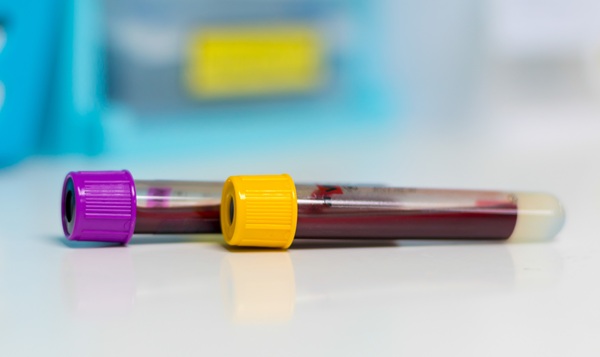
The study analyzed blood samples from 22 patients undergoing hip replacement surgery, collected before the procedure and again on days one and 14 afterward. Researchers isolated circulating MPCs and performed RNA sequencing to identify gene expression patterns linked to heterotopic ossification. Their findings, published in Nature Communications, revealed a distinctive 32-gene signature associated with abnormal bone formation. Using machine learning algorithms, the researchers developed a predictive model that identified patients likely to develop HO with up to 90 percent sensitivity and 100 percent specificity.
Experiments in a mouse model confirmed that circulating MPCs were released into the bloodstream as early as six hours after injury—more than six weeks before HO becomes visible through conventional imaging. The researchers suggest that a simple blood test performed within one to three days after hip replacement surgery could identify approximately 30 percent of patients truly at risk of developing HO. This approach could help physicians target preventative treatments only to those who need them, while sparing the majority of patients from unnecessary interventions such as radiation therapy or anti-inflammatory medications.
The team is now developing a droplet digital PCR–based test for the 32-gene signature to make the assay faster, more sensitive, and suitable for clinical laboratory use. Larger patient studies and regulatory validation are planned before the technology can be introduced into routine clinical practice. The researchers noted that detecting circulating progenitor cells linked to abnormal bone formation weeks before radiographic detection may provide a critical opportunity for early intervention. They also suggest that the approach could eventually be applied to other musculoskeletal conditions involving abnormal cell differentiation, including osteoarthritis and certain genetic bone disorders.
Related Links:
Mass General Brigham