Blood Test Brings Alzheimer’s Biomarker Assessment to Routine Labs
Posted on 09 Jul 2026
Beckman Coulter Diagnostics has received CE Mark under IVDR for the Access p‑Tau217 assay, a blood test designed to support clinical evaluation of amyloid pathology in patients with signs and symptoms of cognitive decline. The company also introduced the Access BD‑pTau217 Research Use Only (RUO) assay at the Alzheimer’s Association International Conference (AAIC) 2026 in London. Both assays run on the DxI 9000 Immunoassay Analyzer to consolidate clinical and research testing on a single high‑precision platform.
The CE‑marked assay measures phosphorylated tau (p‑Tau217), a biomarker associated with Alzheimer’s disease, enabling laboratories to operationalize blood‑based assessment within routine diagnostic pathways. The BD‑pTau217 RUO assay is designed to selectively detect the short form (low molecular weight) of p-Tau217 originating in the brain, aiming to increase biological specificity and refine characterization of central nervous system pTau217 signals in blood. Together, the offerings are positioned to expand access to blood‑based p‑Tau217 testing across Europe and other CE‑recognizing markets.
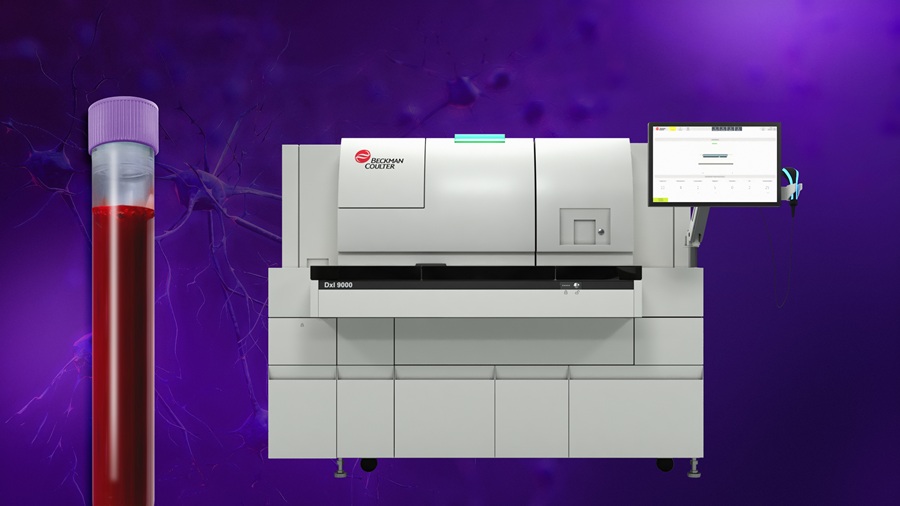
The platform approach centers on the DxI 9000 Analyzer, described as a highly sensitive, scalable system for detecting low‑abundance biomarkers with consistency. In addition to the two p‑Tau217 assays, laboratories can run existing RUO assays for glial fibrillary acidic protein (GFAP), brain‑derived tau (BD‑Tau), neurofilament light (NfL), beta‑amyloid 1‑42, and apolipoprotein E ε4 on the same analyzer. The Access p‑Tau217 assay was developed using AlzPath’s antibody, cited in more than 200 peer‑reviewed publications.
Early research findings reported by the company indicate that higher biological specificity may improve interpretability of complex datasets and clarify tau‑related pathology. In the Australian Imaging, Biomarkers and Lifestyle (AIBL) Study of Ageing, plasma p-Tau217 demonstrated strong performance as a blood‑based marker of Alzheimer’s pathology, and brain‑derived p-Tau217 showed additional specificity when evaluated alongside amyloid and tau positron emission tomography (PET) imaging.
“Our CE‑marked Access p‑Tau217 assay brings a well‑established Alzheimer’s biomarker into routine clinical workflows, enabling laboratories to scale blood‑based evaluation of disease pathology more efficiently. By making testing more accessible and operationally scalable, it helps integrate biomarker‑based assessment into everyday clinical practice,” said Dr. Chris Bird, Chief Medical Officer at Beckman Coulter Diagnostics.