Blood Biomarker Patterns Could Support Monitoring of Anti-Amyloid Treatment
Posted on 28 Sep 2026
Patients with early-stage Alzheimer’s disease may receive anti-amyloid therapy to clear amyloid protein deposits from the brain. These treatments can slow disease progression, but they do not cure the disease or restore cognitive function to normal. Clinicians also have limited options for monitoring treatment effects in individual patients beyond costly brain imaging. New findings now suggest that blood proteins could provide a less invasive way to track biological changes during therapy.
Washington University School of Medicine in St. Louis researchers identified changes in plasma proteins among patients treated with lecanemab, an anti-amyloid therapy marketed as Leqembi. The study evaluated blood-based biomarkers that reflect brain health and may indicate how treatment is affecting amyloid clearance and other disease-related processes. Researchers measured 130 proteins in plasma and tracked how their levels shifted during treatment.
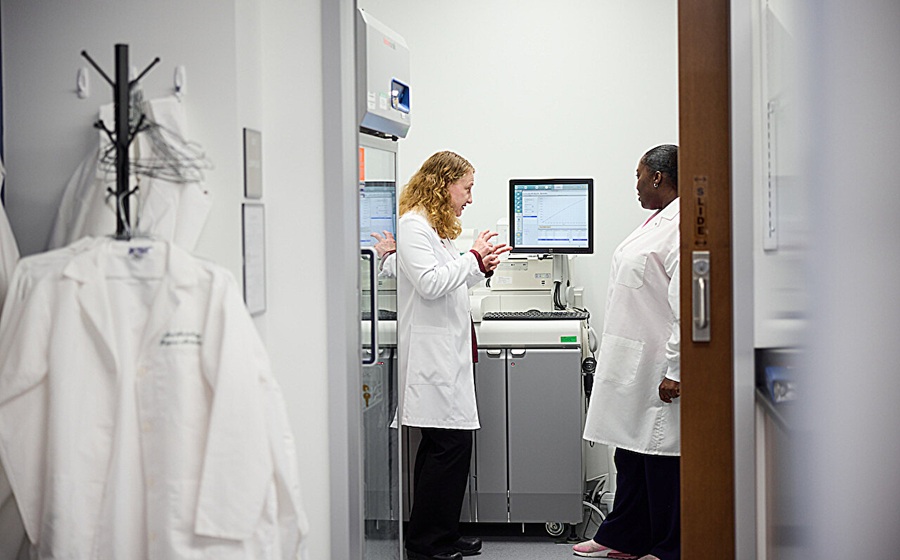
The longitudinal cohort study included 197 patients with early Alzheimer’s symptoms and evidence of amyloid buildup. Participants received lecanemab infusions every two weeks for up to two years at WashU Medicine’s Memory Diagnostic Center. Patients provided blood samples roughly every six months, underwent cognitive testing, and a subset also received brain imaging.
Researchers found significant changes in 34 proteins during treatment. Several markers of Alzheimer’s pathology shifted toward levels seen in cognitively healthy individuals, including phosphorylated tau, which builds up abnormally in the brains of people with Alzheimer’s. Several inflammation-related proteins also increased, consistent with activation of microglia, the brain's immune cells involved in clearing amyloid.
The study compared treated patients with 458 people without cognitive impairment or amyloid buildup and 1,312 cognitively impaired people from WashU Medicine’s Knight Alzheimer Disease Research Center who were not receiving anti-amyloid treatment. The results appear in The Lancet Neurology on September 24, 2026. The researchers identified biomarker sets associated with amyloid clearance and with changes in memory and thinking, while noting that the single-clinic findings have not yet been validated elsewhere.
“When patients want to know how the anti-amyloid treatments are working, it's difficult to provide a clear answer. We know from clinical trials that anti-amyloid treatments are likely to help the average patient with early symptoms of Alzheimer's, but right now we have limited tools to monitor treatment effects. It would be very helpful to have a blood test that told us how the treatment was working in an individual patient, especially whether amyloid is being cleared from the brain and how the brain is changing,” said Suzanne Schindler, M.D., Ph.D., professor of neurology at WashU Medicine.
Related Links
WashU Medicine