






Biologic Clock Found to Be Single Protein
By Biotechdaily staff writers
Posted on 16 Jan 2003
Culminating four decades of research, a husband-and-wife research team has discovered the protein responsible for setting the length of periods of activity and inactivity within cells. The discovery was reported in Biochemistry (2002;41:40).Posted on 16 Jan 2003
The team found that cells increase in size at a periodic rate. They enlarge themselves for 12 minutes, then rest for 12 minutes before growing again. Eventually, the team found that a single cylinder-shaped protein molecule (ECTO-NOX) regulated the cell enlargement cycle. The protein has two activities: one serves as a catalyst for growth for 12 minutes, then rests for 12 minutes while another activity is carried out. The activities alternate to generate the 24-minute period length.
"We found that we could produce clocks with cycles of between 22 and 42 minutes,” said James Morre, a professor of medicinal chemistry at School of Pharmacy at Purdue University (West Lafayette, IN, USA) who made the discovery along with his wife, Dorothy Morre. "The ‘day' that the cell experienced was precisely 60 times the period length of the protein's cycle.” While it is now difficult to make the biologic clock speed up or slow down, he noted that it can be reset.
Because the biologic clock affects almost every bodily activity, the new discovery could be very important to researchers in many fields of medicine. "This could give us new insights into cellular activity, such as cholesterol synthesis, respiration, heart rhythms, response to drugs, sleep, and alertness,” said Prof. Morre.
Related Links:
Purdue Univ




Platinum Member

Automated Coagulation Analyzer
Hemolumi H6
Gold Member

Electrolyte Analyzer
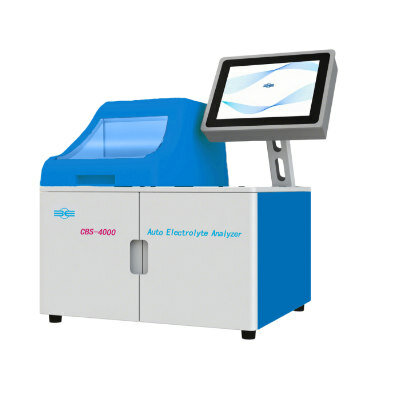
CBS-4000 (CBS-400)

Electrolyte Analyzer
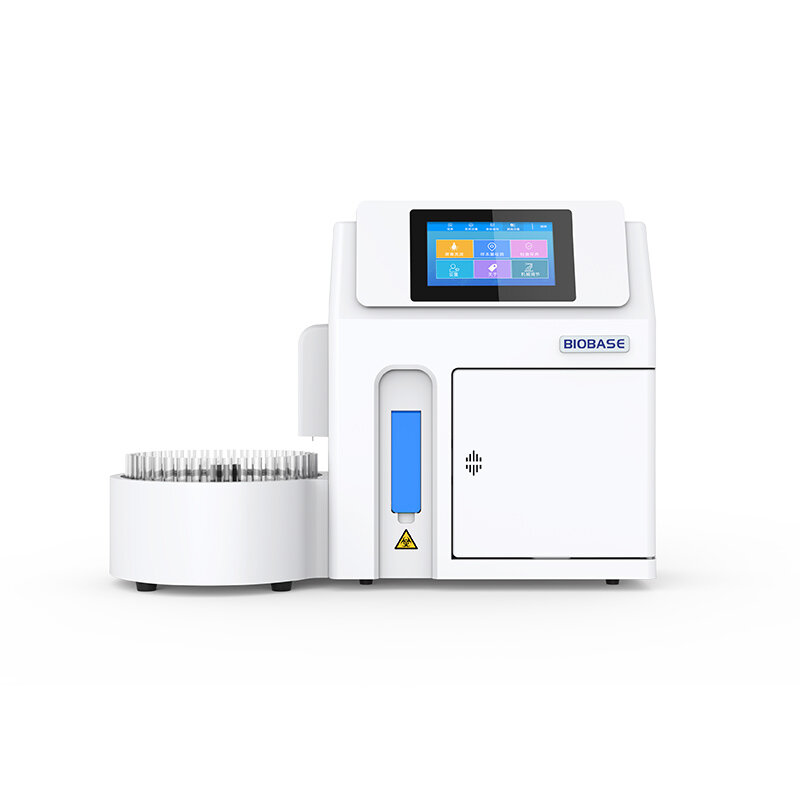
BKE-B

Urine Analyzer
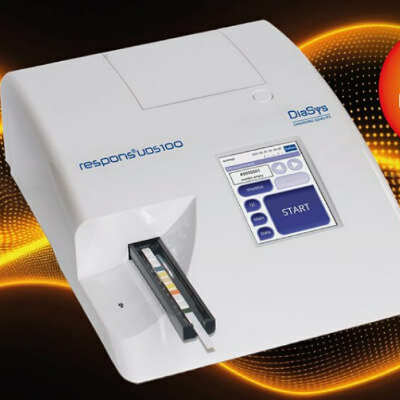
respons® UDS100


