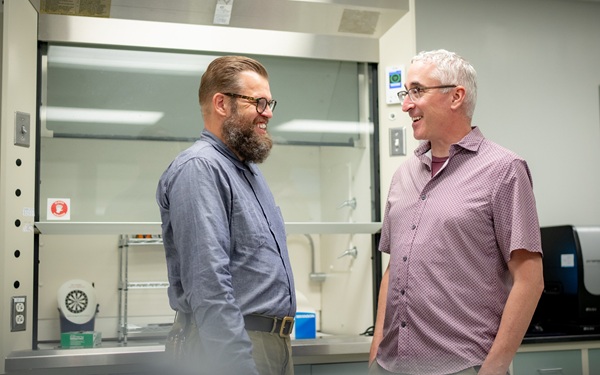
Computer Forecasts Outcome of Breast Cancer
By Biotechdaily staff writers
Posted on 02 Aug 2002
In a preliminary study, a new computer system correctly predicted the outcome of breast cancer in almost 90% of patients. The researchers say the system may someday help save lives by helping specialists determine which patients should have intensive treatment at an early stage. The study findings were reported in the July 27, 2002, issue of New Scientist.Posted on 02 Aug 2002
The technique was developed by two scientists, Dr. Gajanan Sherbet and Dr. Raouf Naguib, at Newcastle University (UK), as an extension of image cytometry. They programmed their computer to measure four indicators of cancer aggressiveness: the proportion of cells with extra DNA, the pattern of DNA levels in the whole sample, the number of cells that were dividing, and the shape of the cell nuclei. This information was fed into a neural network and then subjected to fuzzy logic, which weights data to make it fit the patterns as closely as possible.
The scientists then calibrated the system, using tissue samples from 50 breast cancer patients and data about the outcome in each case, such as recurrence of the cancer and the five-year survival rate. Data from another 50 cases were fed into the computer, which was then asked to predict which women would develop tumors in their lymph nodes. The computer did so, with 88% accuracy and gave a similar figure when asked to predict which women would still be alive after five years.
"We believe that this technique has produced more reliable prognostic factor models that those obtained using either the statistical or artificial neural network-based methods,” stated the research team. They also noted that the research suggests that some of the statistical methods currently used may be unreliable.
Related Links:
Newcastle U.




Platinum Member

Automated Coagulation Analyzer
Hemolumi H6
Gold Member

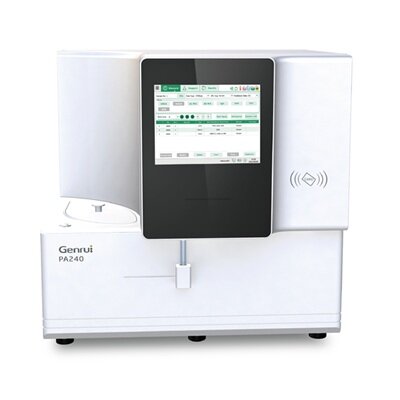
Fully-auto Specific Protein (Nephelometry) Analyzer
PA240

New

Gastrointestinal Panel
Xpert® GI Panel

LAIR2 Antibody Pair Set
LAIR2 Antibody Pair [Biotin]