






Problem-Solving Strategy Depends on Estrogen Levels
By Biotechdaily staff writers
Posted on 09 Jun 2002
Investigators have found that activation of different parts of the brain may depend on the presence or absence of estrogen. A study on the effect of the hormone or its lack on rat learning behavior appears in the June 2002 issue of Behavioral Neuroscience.Posted on 09 Jun 2002
Results from previous studies on rats were difficult to interpret, as the rats were forced to cope with stress as well as learn new tasks. The current studies were carried out using positive-reward, food-based tests in order to remove stress from the equation.
Two different types of tasks were studied: a place-learning task, where the food was always in the same place, and a response-learning task, where a new route to the food had to be learned. The ovaries were removed from the rats to decrease circulating estrogen levels. One group then had estrogen levels raised by injections of the hormone.
In the place-training test, food always was at the same place, but the required turn in the maze changed, depending on the rats' starting point. Rats on estrogen learned the task faster than the untreated group. For the response-training test, the rats always found food by turning right (or left) at the first opportunity regardless of where they had started. Rats without estrogen learned this task quicker than the estrogen-treated ones.
"What we found is that given these analogous tasks that require different cognitive strategies, estrogen biased the rats to use a place, or spatial, strategy,” said Dr. Donna L. Korol, of the University of Illinois (Urbana-Champaign, USA). "Those not given estrogen are better using a response, or non-spatial, strategy. This suggests that estrogen is not good for all kinds of memory. Rather, it is very specific in dictating what strategy one takes. Estrogen may enhance some and impair other forms of learning.”
The researchers extrapolated their findings in rats to suggest that they may mimic the situation in postmenopausal women. "A postmenopausal woman not on HRT [hormone replacement therapy] may believe that her ability to solve a problem as she always had is slipping. In reality, the brain may be shifting gears into a different strategy that the woman is not used to harnessing,” Korol said.
Related Links:
University of Illinois




Platinum Member

Automated Coagulation Analyzer
Hemolumi H6
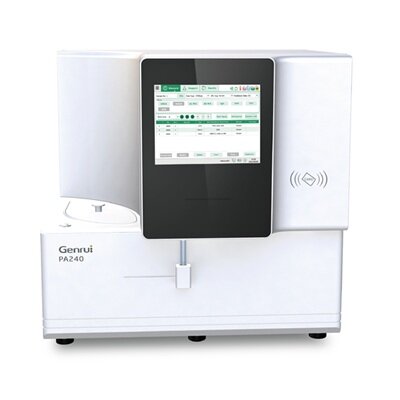
Gold Member

Fully-auto Specific Protein (Nephelometry) Analyzer
PA240

New

Alzheimer's Disease Biomarker Assay
Elecsys Phospho-Tau (217P) Plasma


Automated Clinical Chemistry Analyzer
Envoy 500+


