






Broad Spectrum Antibiotic Found in Saliva
By Biotechdaily staff writers
Posted on 22 May 2002
A peptide from one end of a protein molecule found in human saliva has been shown in laboratory tests to be a potent antibiotic, effective against several types of bacteria and fungi, some of which are resistant to current drugs. This finding was presented at the annual meeting of the International Association of Dental Research in San Diego (CA, USA).Posted on 22 May 2002
The peptide is active in vitro at very low concentrations (~10 micrograms per milliliter), shows little or no toxicity to mammalian cells, and low tendency to elicit resistance. So far it has been shown in vitro to kill both the fungal pathogens that cause opportunistic infections such as candidiasis, cryptococcosis and aspergillosis, as well as several bacteria. These include E coli and P gingivalis, which cause serious intestinal and oral infections, respectively, and S mutans, which causes dental caries.
"If these findings hold up in animal and human trials, the peptide, labeled MUC7 20-mer, could form the basis for promising new drugs for treating a wide range of infections,” said Libuse Bobek, Ph.D., leader of the research team from the University of Buffalo School of Dental Medicine (New York, USA). "There is an increasing need for new antimicrobial agents, especially antifungals,” added Dr. Bobek. "Because there are only a handful of these drugs, they are used widely, and several fungal strains already have developed resistance.
With such a potent antimicrobial agent present in human saliva, why do people have oral infections? The answer seems to be that since the peptide is a segment of a protein molecule it rarely is present in the active form, and the large protein molecule from which it is derived does not have antibiotic activity. While MUC7 20-mer is composed of 20 amino acids, smaller forms of the peptide are also active in vitro, and experiments are continuing with increasingly shorter pieces.
Related Links:
Univ. of Buffalo




Platinum Member

Automated Coagulation Analyzer
Hemolumi H6
Gold Member

Fully-auto Specific Protein (Nephelometry) Analyzer
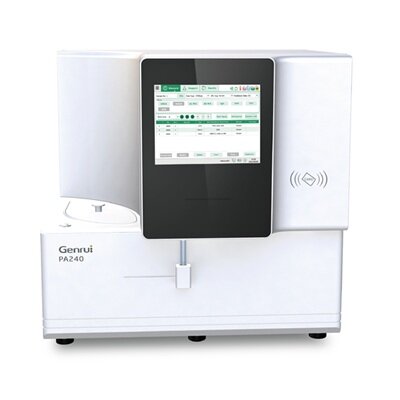
PA240
Gold Member
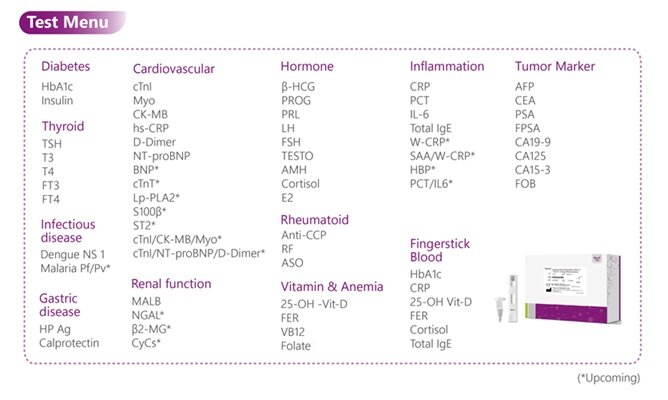
Quantitative lmmunoassay Test Menu

New
Silver Member

Connectivity Solution
EKF Link


