Inherited Genetic Differences Help Explain Variable CAR T-Cell Therapy Outcomes
Posted on 29 Jul 2026
Chimeric antigen receptor (CAR) T-cell therapy has transformed outcomes in certain blood cancers, but unpredictable toxicities and variable response durability remain major hurdles. Clinicians often lack biomarkers to anticipate cytokine release syndrome, neurotoxicity, or insufficient cellular expansion. New findings demonstrate that inherited genetic variation shapes both efficacy and adverse events with CAR T-cell therapy.
Mass General Brigham Cancer Institute, working with the Broad Institute of MIT and Harvard and Dana-Farber Cancer Institute, analyzed germline genetic profiles to identify associations with clinical CAR T-cell activity and toxicity. Using whole-genome sequencing, investigators evaluated how inherited variants modulate treatment outcomes in aggressive lymphoma. The results were published in Science Immunology on July 24, 2026.
The team sequenced the entire genomes of more than 200 patients enrolled across two major clinical trials of CAR T-cell therapy. They then correlated specific germline variants with clinical endpoints, including treatment-related toxicities and cellular expansion, a pharmacodynamic measure associated with antitumor activity. Functional work complemented these analyses by engineering donor T cells to model variant effects on inflammatory responses.
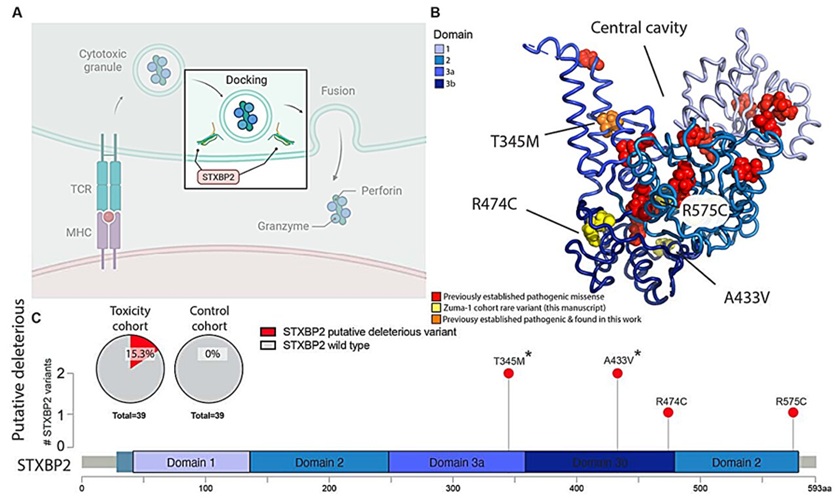
In one trial, variants that silenced the STXBP2 gene in patients’ T cells were linked to toxicity following CAR T-cell therapy, and donor T cells engineered to lack STXBP2 and/or express these silencing variants induced inflammation. Across both trials, variants in ADAMTSL3 were associated with protection from treatment-related toxicity. Variants in PTPN22 were strongly associated with enhanced CAR T-cell expansion, which correlates with effective therapy.
Together, the findings indicate that germline differences in genes such as STXBP2, ADAMTSL3, and PTPN22 can influence both the safety and therapeutic activity of CAR T-cell and other immune cell therapies. The investigators noted that these insights could inform future strategies, including selecting appropriate donors, where a single donor can provide T cells for hundreds of patients, and designing augmented CAR T cells. Both approaches would leverage a deeper understanding of how human genetic variation shapes cellular therapy behavior.
Related Links
Mass General Brigham Cancer Institute