Blood Eosinophil Count May Predict Cancer Immunotherapy Response and Toxicity
Posted on 29 May 2026
Immune checkpoint inhibitors have improved outcomes across many cancers, yet only a subset of patients derive durable benefit and biomarkers to guide treatment remain limited. Eosinophils, best known for roles in allergy and antiparasitic defense, are emerging as important players in tumor immunity. Understanding how these cells influence tumor biology could help refine patient selection for immunotherapy and monitoring. A new review details how eosinophil levels may predict response to immunotherapy and survival in solid cancers.
At the University of Liège (Liège, Belgium), investigators synthesized epidemiologic and experimental evidence on eosinophils in solid tumors, outlining their potential as predictors of immunotherapy response and patient survival. The analysis maps the multifaceted behavior of eosinophils across cancer types. It highlights direct antitumor functions through cytotoxic granule proteins and broader immune-modulating interactions with lymphocytes that shape the tumor microenvironment.
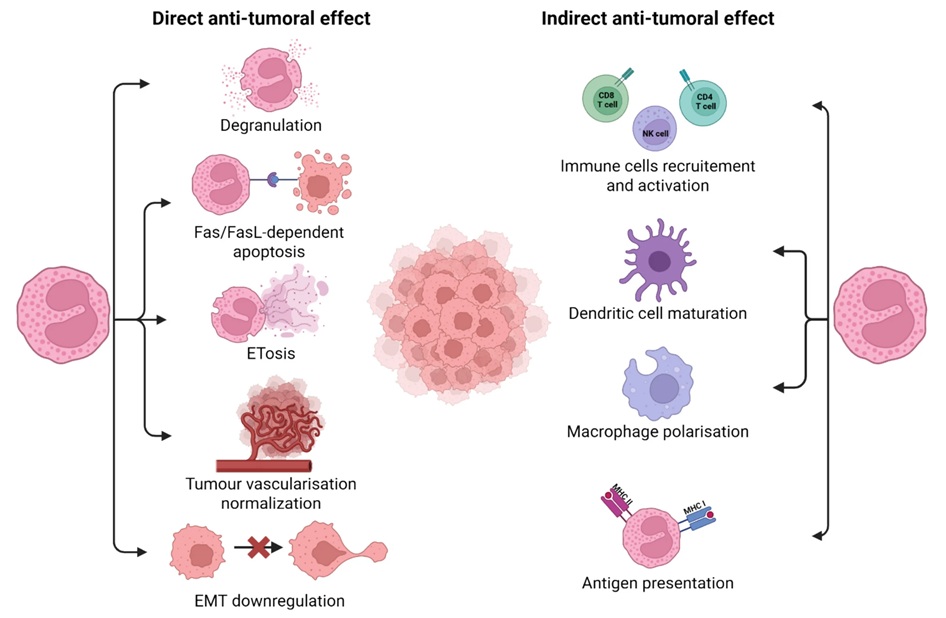
Published in Journal of Experimental & Clinical Cancer Research, the review integrates population-level studies and mechanistic data. Epidemiologic analyses suggest that higher eosinophil counts may be associated with a reduced risk of developing certain malignancies. Once cancer is established, however, the influence of eosinophils varies by tumor type and biological context.
Across studies of immune checkpoint inhibitors (ICIs), elevated eosinophil counts measured before or during treatment correlated with improved treatment responses and longer survival. This heightened immune activation also tracked with a greater incidence of immune-related adverse effects, underscoring the need for vigilance. The authors indicate that eosinophil measurement could serve as a practical tool to help identify patients most likely to benefit from ICIs and to anticipate potential complications, while emphasizing careful monitoring.
The work reflects collaboration between the Oncology Department of the CHU de Liège and the Human Genetics Unit at GIGA. The authors caution that variability in eosinophil behavior across tumor types and the lack of standardized measurement protocols limit immediate clinical generalization. They call for further research to clarify mechanisms and determine conditions under which eosinophils can be used reliably as biomarkers or as therapeutic targets.
Related Links
University of Liège