Bacteriophages Delivered by Dry Powder Cure Lung Diseases in Model
By LabMedica International staff writers
Posted on 03 Aug 2018
A novel antibacterial transport system utilized a dry powder approach to deliver microparticles coated with bacteriophages to difficult to access areas in the lungs.Posted on 03 Aug 2018
Lung infections associated with pneumonia, or cystic fibrosis caused by Pseudomonas aeruginosa or other bacteria, result in significant morbidity and mortality, in part owing to the development of multidrug resistance, also against last-resort antibiotics. Lytic bacteriophages (viruses that specifically kill bacteria) can reduce lung-associated infections, yet their clinical use is hindered by difficulties in delivering active phages to the deep lung.
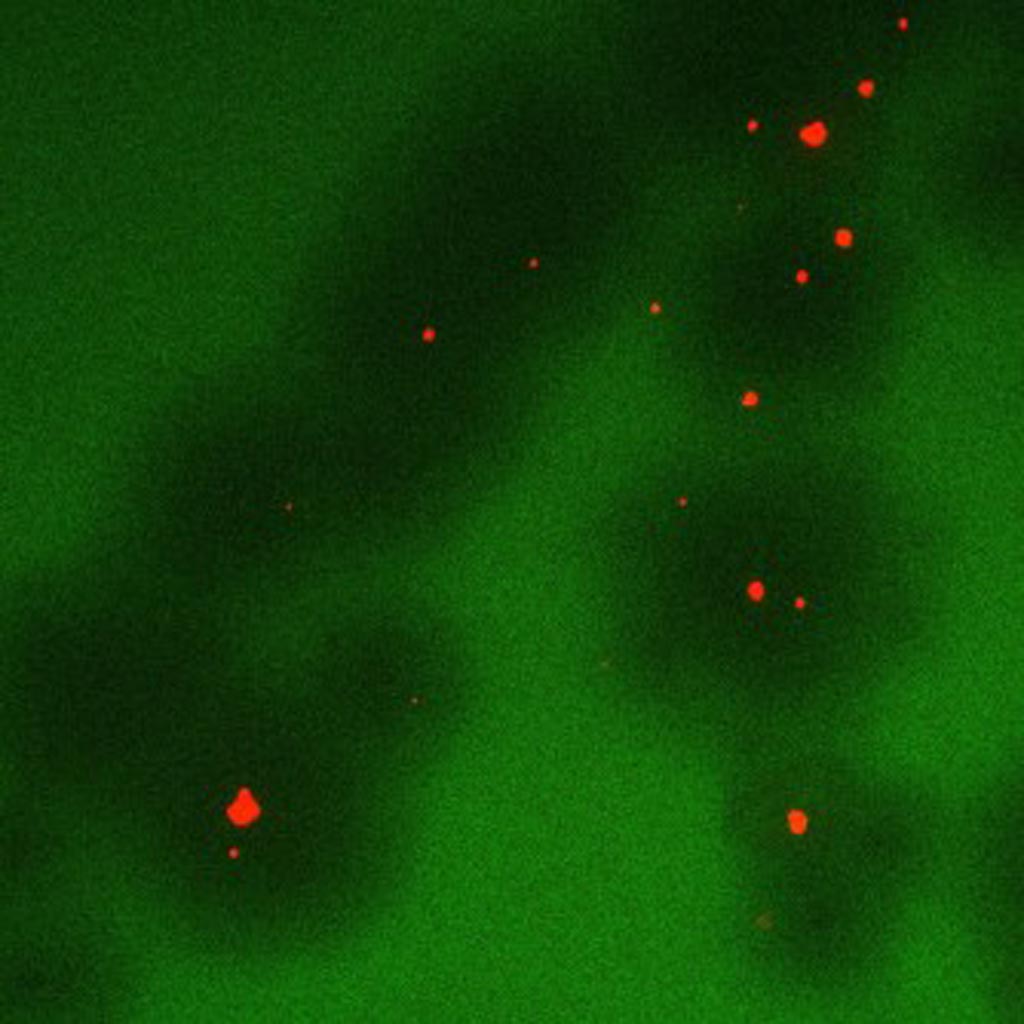
Image: Image shows the effect particles coated with phage (red) have on bacterial colonies (green). The dark green areas around the particles show areas where bacteria are being killed. (Photo courtesy of Rachit Agarwal, Garcia Laboratory, Georgia Institute of Technology).
To solve the problem of phage transport, investigators at the Georgia Institute of Technology (Atlanta, USA) developed microparticle carriers fabricated from the same polymer material used in dissolving sutures. These porous particles were made to be large enough to avoid rapid clearance by the body, but light enough to be delivered deep into the lungs. Phages were incubated with the particles, which were then dried.
The investigators reported in the July 16, 2018, online edition of the journal Nature Biomedical Engineering that phage-loaded polymeric microparticles deposited throughout the lungs via dry powder inhalation delivered active phages. These phage-loaded microparticles effectively reduced P. aeruginosa infections and the associated inflammation in wild-type and cystic fibrosis transmembrane-conductance-regulator knockout mice, and rescued the mice from pneumonia-associated death. The phage-coated microparticles were more effective at clearing bacteria than dried phage particles by themselves. The polymer material was biodegradable and was cleared from the animals within a few days.
“When we immobilized the phage on the particles, we could retain good activity for days – as long as two weeks at room temperature. We could store these particles, and when we delivered them to mice, get good distribution through the lungs. We believe the particles help stabilize the phage and improve the distribution in the lungs,” said senior author Dr. Andrés García, professor of mechanical engineering at the Georgia Institute of Technology. “Phage delivery is an area where the right type of material could make a difference in therapeutic applications. We set out to engineer a biomaterial carrier that would keep the phage active while delivering them deep into the lungs in a uniform fashion. This is a key step in moving this potential therapy forward.”
Related Links:
Georgia Institute of Technology




Platinum Member

Automated Coagulation Analyzer
Hemolumi H6
Gold Member

Quantitative POC Immunoassay Analyzer
EASY READER+

Electrolyte Analyzer
BKE-B

Manual Pipetting Aid
Pipette Controllers macro