Novel Antimicrobial Role of Intracellular Organelle
By LabMedica International staff writers
Posted on 30 Aug 2017
A recent study illustrated the importance of cellular organelles called peroxisomes to the ability of macrophages to internalize and destroy pathogenic microorganisms through phagocytosis.Posted on 30 Aug 2017
Peroxisomes are organelles found in virtually all eukaryotic cells. They are involved in catabolism of very long chain fatty acids, branched chain fatty acids, D-amino acids, and polyamines, reduction of reactive oxygen species – specifically hydrogen peroxide – and biosynthesis of plasmalogens, i.e., ether phospholipids critical for the normal function of mammalian brains and lungs. They also contain approximately 10% of the total activity of two enzymes in the pentose phosphate pathway, which is important for energy metabolism
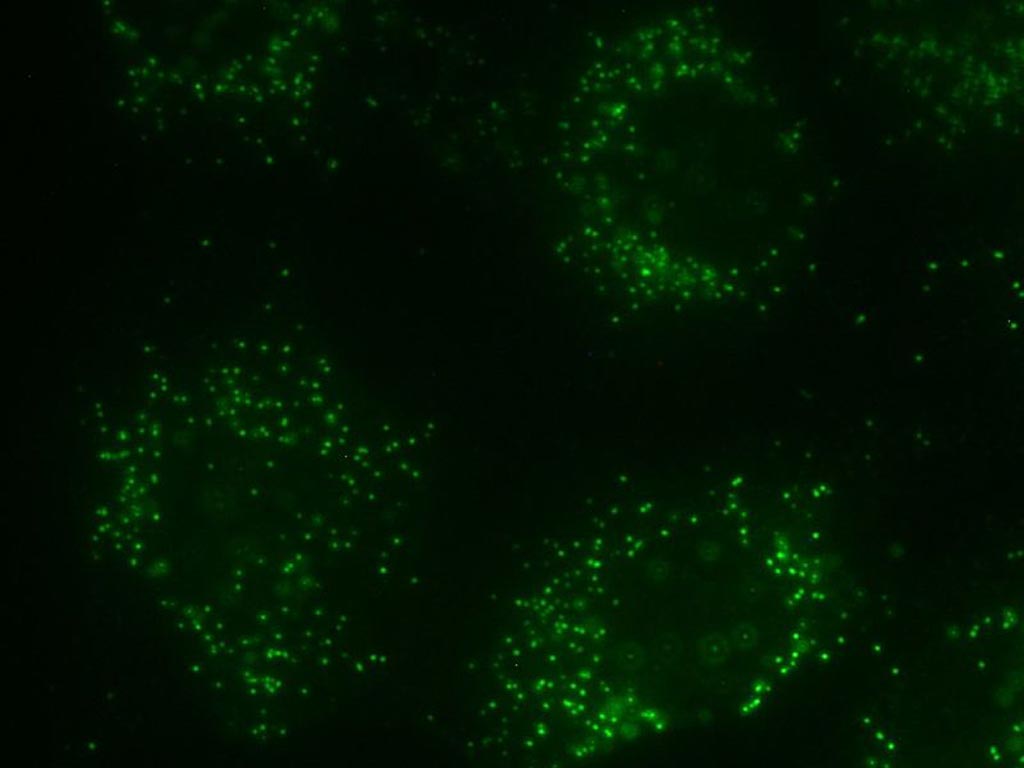
Image: A micrograph showing peroxisomes in rat neonatal cardiomyocytes (Photo courtesy of Wikimedia Commons).
Investigators at the University of Alberta Faculty of Medicine & Dentistry (Edmonton, Canada) worked with cultures of Drosophila (fruit fly) and mouse macrophages. They reported in the July 18, 2017, issue of the journal Immunity that peroxisomes were necessary for the engulfment of bacteria by these macrophages. Peroxisomes were also required for resolution of bacterial infection through canonical innate immune signaling. Reduced peroxisome function impaired the turnover of the oxidative burst necessary to fight infection.
The investigators also showed that peroxisomes could transmit to other organs evidence that an infection was in progress. Failure of the organelle to function interrupted this communication and the organism did not fight the pathogen.
"To find organelles like peroxisomes that had no link whatsoever to fighting bacterial infections was a critical discovery - it will help expand the roles of what this important organelle does in innate immunity against bacterial and fungi, and its involvement in viral signaling and the lethal peroxisome genetic diseases," said contributing author Dr. Richard Rachubinski, professor of cell biology at the University of Alberta Faculty of Medicine & Dentistry. "As the threat of bacterial infections continues to grow, this discovery can help move our understanding of immunity forward."
Related Links:
University of Alberta Faculty of Medicine & Dentistry




Platinum Member

Automated Coagulation Analyzer
Hemolumi H6

Gold Member

Flocked Fiber Swabs
Puritan® Patented HydraFlock®

HPV Test
Allplex HPV28 Detection
New

Portable POCT Blood Gas Analyzer
BD100