Mitochondrial Protein Linked to Development of Prostate Cancer
By Gerald M. Slutzky, PhD
Posted on 23 Nov 2016
Results obtained from experiments with genetically engineered mouse models revealed a direct link between the mitochondrial chaperone protein, TRAP1 (TNF receptor associated protein 1) and the development of prostate cancer.Posted on 23 Nov 2016
TRAP1 is a chaperone protein that is structurally similar to heat shock protein 90 (HSP90), which is found in elevated levels in the mitochondria of cancer cells. In a prior study, investigators at The Wistar Institute (Philadelphia, PA, USA) genetically engineered a line of mice with the gene for TRAP1 protein "knocked out" to determine what impact it may have on disease. They found that these mice lived longer and experienced fewer age-related illnesses than did normal animals.
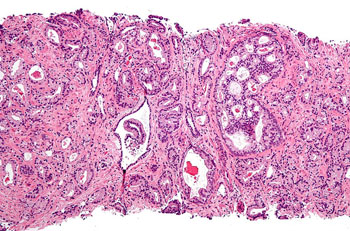
Image: A micrograph of prostate adenocarcinoma, acinar type, the most common type of prostate cancer (Photo courtesy of Wikimedia Commons).
In the current study, the investigators created a line of mice that overexpressed the TRAP1 gene. Furthermore, these animals also lacked one copy of the important tumor suppressor gene PTEN. At least one copy of PTEN is deleted in about 40% of cases of prostate cancer and is often found in more aggressive tumors, so mice without this gene more accurately simulate the behavior of the disease.
The investigators reported in the October 17, 2016, online edition of the Journal of Biological Chemistry that combination of increased TRAP1 coupled with the loss of PTEN resulted in the development of aggressive, early-onset invasive prostate cancer. The mice also displayed increased tumor cell proliferation, inhibition of apoptosis, and increased epithelial cell invasion.
"In our prior study, while we had evidence that hinted at TRAP1's role in tumor growth, we lacked the direct evidence we needed to define the role of this protein in prostate cancer development," said senior author Dr. Dario C. Altieri, president and CEO of The Wistar Institute. "As we better understand the role of mitochondria in cancer, it's important to thoroughly study the roles of the proteins involved in helping tumors receive the energy they desire for survival. What is exciting about these findings is the fact that we believe TRAP1 is a druggable target. We are continuing to advance our promising research and development program aimed at targeting the mitochondria in tumors."
Related Links:
The Wistar Institute




Platinum Member

Automated Coagulation Analyzer
Hemolumi H6

Gold Member

Neonatal Heel Incision Device
Tenderfoot

Manual Pipetting Aid
Pipette Controllers macro

New

Portable POCT Blood Gas Analyzer
BD100