Monoclonal Antibody Treatment Blocks Lymphoma Progression in Mouse Model
By LabMedica International staff writers
Posted on 16 Aug 2016
Immunotherapy based on monoclonal antibodies that specifically bind to the surface protein junctional adhesion molecule (JAM)-C, which is expressed by a variety of different cell types, including human B lymphocytes and some B-cell lymphoma subtypes, blocked progression of lymphoma in a mouse xenograft model of mantle cell lymphoma.Posted on 16 Aug 2016
Previous studies had shown that treatment with anti-JAM-C polyclonal antibodies reduced homing of human B cells to lymphoid organs in a NOD/SCID mouse model. In the present study, which was published in the June 2, 2016, online edition of the Journal of Leukocyte Biology, the role of JAM-C in the engraftment of human lymphoma B cells in mice was investigated.
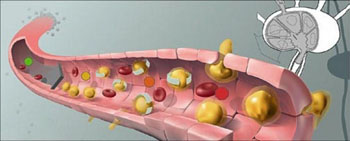
Image: Blocking JAM-C on lymphoma cells inhibits their migration through vessel walls (Photo courtesy of the Université de Genève).
Investigators at Université de Genève (Switzerland) worked with the "H225" monoclonal antibody that had been designed to bind solely to JAM-C. They found that administration H225 reduced tumor growth of JAM-C+ MCL cells in bone marrow, spleen, liver, and lymph nodes of mice. Treatment with anti-JAM-C antibodies significantly reduced the proliferation of JAM-C-expressing lymphoma B cells. Moreover, the binding of anti-JAM-C antibodies inhibited the phosphorylation of ERK1/2, without affecting other signaling pathways.
"Since they cannot survive in the blood for long, these malignant cells are compelled to find a more accommodating environment - such as the lymphatic system - where they can proliferate. We decided to focus on this Achilles heel by containing them in the blood so as to prevent any resulting harm," said senior author Dr. Thomas Matthes, professor of medicine at Université de Genève.
In other words, masking JAM-C expression with H225 prevented more than 50% of lymphoma cells from migrating out of blood vessels and into the lymphoid organs where they could have developed into lymphoma tumors. "This is not its only effect," said Dr. Matthes, "H225 also significantly limited cell proliferation, even when tumor cells had already settled in the lymphatic system. In our mice, we observed the nearly-complete disappearance of already-present tumor cells in the organs."
Related Links:
Université de Genève




Platinum Member

Automated Coagulation Analyzer
Hemolumi H6

Gold Member

Quantitative POC Immunoassay Analyzer
EASY READER+


HPV Test
Allplex HPV28 Detection

Automatic CLIA Analyzer
Shine i6000