Candidate Drug Kills Solid Tumors by Blocking Mitochondrial Respiration
By LabMedica International staff writers
Posted on 03 Mar 2014
Swedish researchers have developed a candidate low molecular weight drug that kills metabolically stressed cancer cells by interfering with the action of their mitochondria.Posted on 03 Mar 2014
In solid tumors, there are areas with poor vascular supply where cancer cells divide more slowly due to a lack of oxygen and nutrients. When other tumor tissue is killed by chemo- or radiotherapy, theses dormant cells begin to grow and regenerate the tumor.
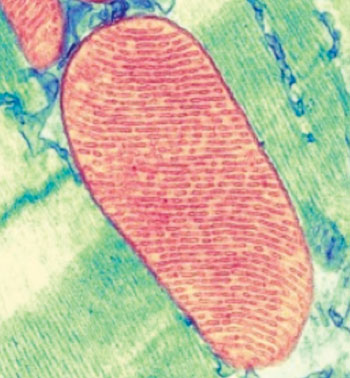
Image: Transmission electron micrograph of a cell mitochondrion (Photo courtesy of the University of California, San Diego).
Investigators at Karolinska Institutet (Stockholm, Sweden) and the biotechnology company Vivolux AB (Uppsala, Sweden) have been looking for new drug candidates that could be used for the treatment and complete destruction of solid tumors. To this end, they employed spheroid cultures of HCT116 colon cancer cells to screen a diverse chemical library in order to find compounds with cytotoxic activity in core, hypoxic, regions of solid tumors.
They reported in the February 18, 2014, online edition of the journal Nature Communications that the screen had identified the compound VLX600, which demonstrated anticancer activity with a large therapeutic window both in vitro and in vivo. VLX600 showed enhanced cytotoxic activity under conditions of nutrient starvation and its anticancer activity was associated with reduced mitochondrial respiration, which led to deficient mitochondrial energy production and tumor cell death.
"We have identified a small molecule that we call VLX600, which in various in vitro and in vivo models has proven effective against dormant colon cancer cells that are otherwise very difficult to treat. VLX600 is a mild inhibitor of mitochondrial respiration, and we have found that dormant cancer cells have a limited possibility to compensate decreased mitochondrial function by increased glycolysis. The dormant cancer cells therefore die by starvation," said senior author Dr. Stig Linder, professor of experimental oncology at Karolinska Institutet.
Related Links:
Karolinska Institutet
Vivolux AB




Platinum Member

Automated Coagulation Analyzer
Hemolumi H6

Gold Member

Quantitative POC Immunoassay Analyzer
EASY READER+

Electrolyte Analyzer
BKE-B

Manual Pipetting Aid
Pipette Controllers macro