Novel Anti-PTEN Rabbit Monoclonal Antibody Optimized for Immunohistochemistry Testing
By LabMedica International staff writers
Posted on 16 Sep 2013
Cancer researchers now have available a rabbit monoclonal antibody for the protein produced by the PTEN tumor suppressor gene that has been optimized for immunohistochemistry (IHC) testing.Posted on 16 Sep 2013
PTEN is one of the most commonly lost tumor suppressors in human cancer. During tumor development, mutations and deletions of PTEN occur that inactivate its enzymatic activity leading to increased cell proliferation and reduced cell death. Frequent genetic inactivation of PTEN occurs in glioblastoma, endometrial cancer, prostate cancer, and reduced expression is found in many other tumor types such as lung and breast cancer. When the PTEN enzyme is functioning properly, it acts as part of a chemical pathway that signals cells to stop dividing and causes cells to undergo programmed cell death (apoptosis) when necessary. These functions prevent uncontrolled cell growth that can lead to the formation of tumors. There is also evidence that the protein made by the PTEN gene may play a role in both cell movement and adhesion of cells to surrounding tissues.
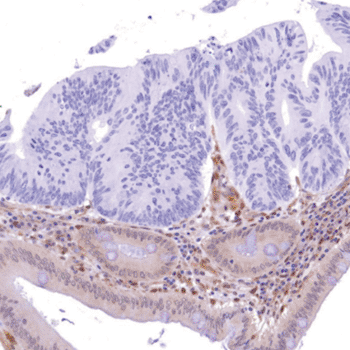
Image: SP218 staining PTEN loss on colon adenocarcinoma sample (Photo courtesy of Spring Bioscience, Inc.).
A new tool for the study the PTEN enzyme was developed by Spring Bioscience (Pleasanton, CA, USA). Spring has recently added the SP218 anti-PTEN rabbit monoclonal antibody to its portfolio of antibodies for cancer research.
The SP218 anti-PTEN monoclonal antibody for IHC on FFPE (formalin-fixed, paraffin-embedded) tissue is available in 0.1, 0.5, and 1.0 mL concentrate configurations, as well as in a 7.0-mL ready-to-use format. Recommended staining protocols are available for manual, semi-automated, and fully automated platforms. SP218 is for research use only and not for use in diagnostic procedures.
"SP218's robust and consistent performance with IHC analysis is particularly important given PTEN's potential as a companion diagnostic biomarker," said Michael Rivers, general manager of Spring Bioscience. "With SP218, we are seeking to set a new gold standard across the industry by offering an extremely sensitive, highly specific antibody optimized for IHC testing that will allow researchers and pathologists to interpret PTEN status with utmost confidence. For our customers, this means we are continuing to offer unparalleled value through superior tests that lead the market in innovation, reliability, and quality."
Related Links:
Spring Bioscience




Platinum Member

Automated Coagulation Analyzer
Hemolumi H6
Gold Member

NEW PRODUCT : SILICONE WASHING MACHINE TRAY COVER WITH VICOLAB SILICONE NET VICOLAB®
REGISTRED 682.9


Urine Analyzer
respons® UDS100

Immunofluorescence Analyzer
IFA System