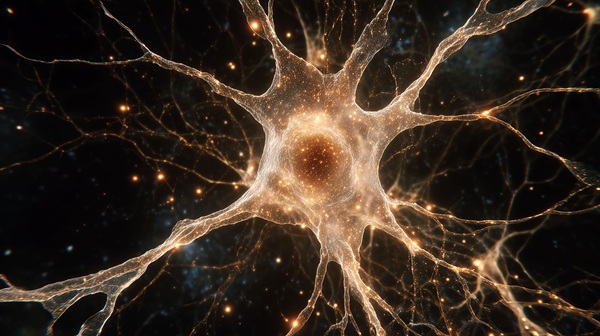
Pathway Outlined that Regulates Centrosome Disassociation During Cell Division
By LabMedica International staff writers
Posted on 08 Dec 2010
The detailed structure of a molecular pathway controlling the disassociation of the centrosome during cell division has been revealed in a recent publication.Posted on 08 Dec 2010
During interphase, centrosomes are held together by a proteinaceous linker that connects the proximal ends of the mother and daughter centrioles. This linker is disassembled at the onset of mitosis in a process known as centrosome disjunction, thereby facilitating centrosome separation and bipolar spindle formation. An enzyme known as NIMA (never in mitosis A)-related kinase or Nek2A has been implicated in disconnecting the centrosomes through disjoining the linker proteins C-Nap1 and rootletin. However, the mechanisms controlling centrosome disjunction have remained poorly understood.
In the current study, which appeared in the November 14, 2010, online edition of the journal Nature Cell Biology, investigators at the University of Heidelberg (Germany) and the University of Leicester (United Kingdom) explained how Nek2A directly interacted with two Hippo pathway components, the mammalian sterile 20-like kinase 2 (Mst2) and the scaffold protein Salvador (hSav1). This interaction regulated the ability of Nek2A to localize to centrosomes and phosphorylate the linker proteins C-Nap1 and rootletin.
Contributing author Dr. Andrew Fry, professor of biochemistry at the University of Leicester, said, "This is an exciting new development that offers potential for finding new ways of inhibiting unregulated cell division which is a characteristic of cancer. Our research has identified new proteins that control centrosome separation as well as assessing the relative contributions of these together with previously described regulators. Importantly, this work suggests exciting new approaches to the targeted treatment of diseases characterized by deregulated cell division, such as cancer, as inhibitors of centrosome separation have the potential to prevent uncontrolled cell proliferation.”
Related Links:
University of Heidelberg
University of Leicester




Platinum Member

Automated Coagulation Analyzer
Hemolumi H6
Gold Member

Automatic Hematology Analyzer
CF9600
New
Gold Member

Serum Indices Control
Acusera Serum Indices Control
New

Nucleic Acid Purification Instrument
QIAsymphony Connect