Gene Therapy Successfully Treats Emphysema in Mouse Model
By LabMedica International staff writers
Posted on 06 Jan 2010
Gene therapy has been used successfully to treat the inherited form of emphysema caused by human alpha-1 antitrypsin (hAAT) deficiency in a mouse model of the disease.Posted on 06 Jan 2010
Investigators from Boston University (MA, USA) used a lentivirus vector to selectively and efficiently deliver transgenes for the synthesis of hAAT to the tracheas of a mouse population. Each animal received only a single exposure to the virus, which was taken up readily by the animals' alveolar macrophages (AM).
Results published in the December 21, 2009, online edition of the Journal of Clinical Investigation revealed that as many as 70% of each animal's alveolar macrophages in it's lung were infected by the virus. These AMs persisted in lung alveoli and expressed the transferred genes for the lifetime of the adult mouse. Lentivirally delivered hAAT ameliorated the progression of emphysema, as evidenced by attenuation of increased lung compliance and alveolar size. After 24 weeks of sustained gene expression, no humoral or cellular immune responses to hAAT protein were detected.
"We applied this novel approach to achieve sustained in vivo expression of normal human alpha-1 antitrypsin protein at levels able to ameliorate emphysema in mice,” said senior author Dr. Darrell Kotton, associate professor of medicine and pathology at Boston University. "The lung macrophages carrying the therapeutic gene survived in the lungs air sacks for the two-year lifetime of the treated mice following a single intra-tracheal injection of the lentiviral vector we had engineered.”
These results run counter to the conventional view that AMs are short lived and suggest that these differentiated cells may be a possible target cell population for in vivo gene therapy applications, including the sustained correction of hAAT deficiency.
Related Links:
Boston University




Platinum Member

Automated Coagulation Analyzer
Hemolumi H6
Gold Member

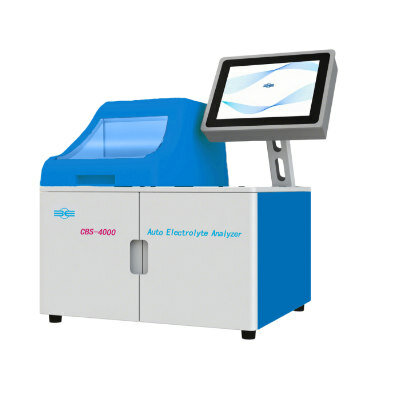
Electrolyte Analyzer
CBS-4000 (CBS-400)
New

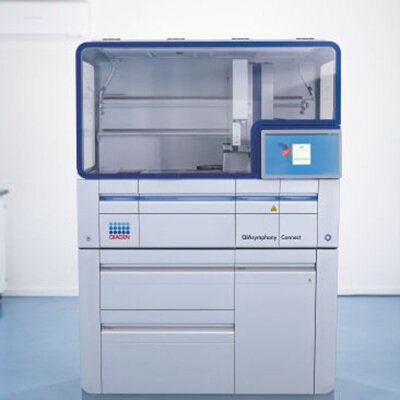
Nucleic Acid Purification Instrument
QIAsymphony Connect
New

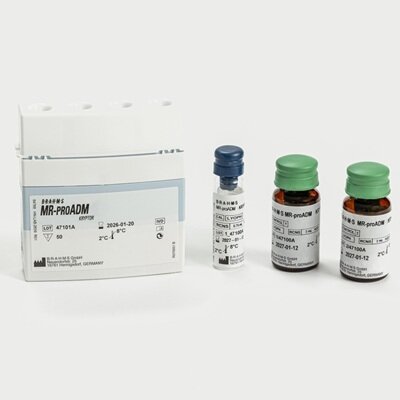
MR-proADM Test
B•R•A•H•M•S MR-proADM KRYPTOR test