Bifunctional Chelators Prevent Aggregation of Amyloid Peptides
By LabMedica International staff writers
Posted on 22 Nov 2009
A novel class of molecular tools has been designed to study the role of metal ions in the process leading to formation of pathogenic amyloid plaques in Alzheimer's disease.Posted on 22 Nov 2009
Investigators at the University of Michigan (Ann Arbor, USA) created bifunctional molecules that contained a moiety that recognized and bound to amyloid-beta peptides as well as a moiety that was a potent chelator. Chelators are chemicals that form soluble, complex molecules with certain metal ions, inactivating the ions so that they cannot normally react with other elements or ions to produce precipitates or scale.
Results published in the October 30, 2009, online edition of the Journal of the American Chemical Society (JACS) revealed that the two copper ion chelators described in the study were able to regulate copper-induced amyloid-beta aggregation in vitro. The bifunctional molecules not only disrupted the formation of aggregates, but also broke up aggregates that already had formed. The modulation of copper-triggered amyloid beta aggregation was found to be more effective for these molecules than that of known metal chelating agents such as EDTA (ethylene diamine tetra-acetic acid) and clioquinol.
"The idea is simple," said senior author Dr. Mi Hee Lim, professor of chemistry at the University of Michigan. "We found molecules known for amyloid-beta recognition and then attached metal binding sites to them. Based on their small size and other properties, we believe our compounds will be able to cross the blood-brain barrier, but we want to confirm that using mouse models."
Related Links:
University of Michigan




Platinum Member

Automated Coagulation Analyzer
Hemolumi H6
Gold Member

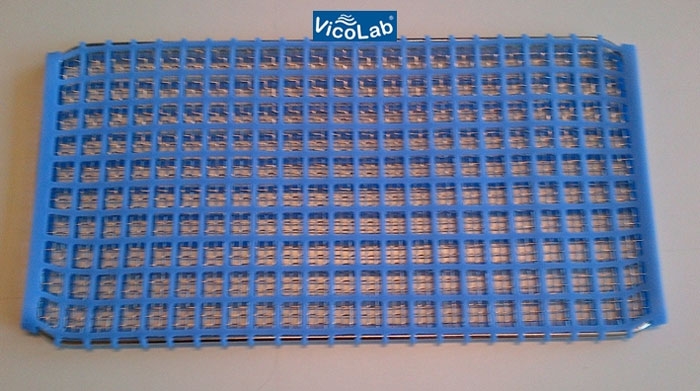
NEW PRODUCT : SILICONE WASHING MACHINE TRAY COVER WITH VICOLAB SILICONE NET VICOLAB®
REGISTRED 682.9
New

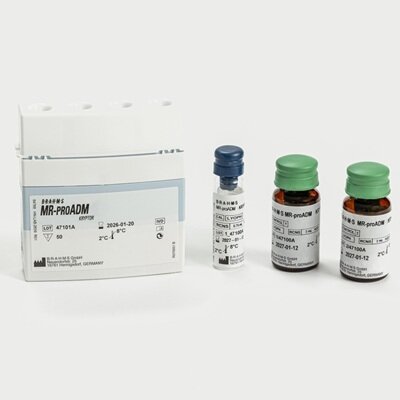
MR-proADM Test
B•R•A•H•M•S MR-proADM KRYPTOR test


Thyroid Test
Anti-Thyroid EIA Test