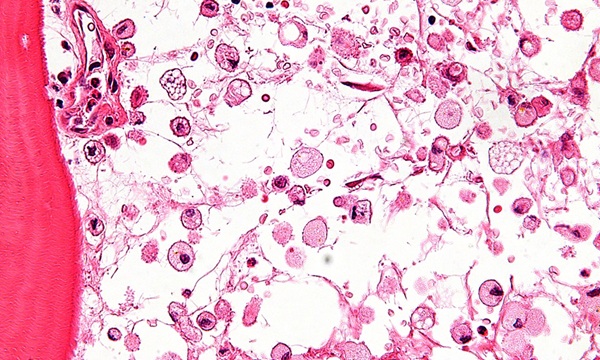
Neurobiologists Evaluate Possible New Treatment for Myasthenia Gravis
By LabMedica International staff writers
Posted on 06 Apr 2009
A possible new treatment for the autoimmune disease myasthenia gravis is based on a complement inhibitor initially isolated from tick saliva and then produced in quantity by recombinant technology.Posted on 06 Apr 2009
Myasthenia gravis is a highly debilitating, chronic neuromuscular disorder with symptoms that include weakness in the arms and legs, chronic muscle fatigue, breathing difficulties, problems with chewing and swallowing, slurred speech, droopy eyelids, and blurred or double vision. Current treatment options include steroids, intravenous immunoglobulins, and surgical removal of the thymus gland. All of these options are accompanied by possibly severe side effects.
In the current study investigators at Saint Louis University (MO; USA) used a rat model of experimentally acquired myasthenia gravis (EAMG) to evaluate the possible benefits of the C5 complement inhibitor rEV576, a protein originally derived from tick saliva. They reported in the February 4, 2009, online edition of the journal Annals of Neurology that administration of rEV576 to rats with a passive form of EAMG reduced disease severity as evinced by 100% survival rate and a low disease severity score. In active EAMG, rats with severe and mild EAMG were protected from worsening of the disease and had limited weight loss. Serum complement activity in severe and mild EAMG was reduced to undetectable levels during treatment, and deposition of complement components at the neuromuscular junction was reduced. Treatment with rEV576 resulted in reduction of toxicity of serum from severe and mild EAMG rats.
"Complement inhibitors are a completely new class of drugs," said senior author Dr. Henry Kaminski, professor of neurology and psychiatry at the University of Saint Louis. "This one will probably prove to be superior to what we have seen. Since complement is activated in many diseases such as Alzheimer's, stroke, and rheumatoid arthritis, our studies may be important for other diseases."
"This disease can leave patients weak and on breathing machines, and conventional treatments can be toxic," said Dr. Kaminski. "There is a real need for better treatments. This study is a step in that direction."
Related Links:
Saint Louis University




Platinum Member

Automated Coagulation Analyzer
Hemolumi H6
Gold Member

NEW PRODUCT : SILICONE WASHING MACHINE TRAY COVER WITH VICOLAB SILICONE NET VICOLAB®
REGISTRED 682.9

Manual Pipetting Aid
Pipette Controllers macro
Gold Member

Fully-auto Specific Protein (Nephelometry) Analyzer
PA240