Combined Drug Regimen Proves Effective in Mouse Lung Cancer Model
By LabMedica International staff writers
Posted on 08 Dec 2008
A chemotherapeutic regimen comprising two investigational drugs has proven effective in shrinking lung tumors with K-Ras mutations in a line of genetically engineered mice.Posted on 08 Dec 2008
Investigators at Harvard University Medical School (Cambridge, MA, USA) focused initially on cancers that derived from a mutation in the PI3K signaling pathway. This pathway is critical to cell survival and is known to control cellular motility and adhesion. PI3K (phosphoinositide 3-kinase) mutations have been linked to tumor development in studies carried out on cell cultures, but their role had not been studied previously in an animal model.
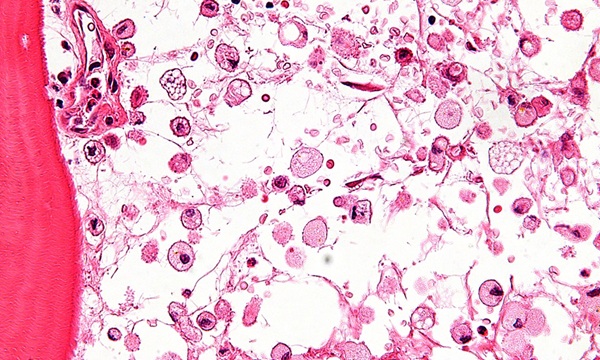
To study the PI3K pathway in animals the investigators genetically engineered a line of mice that, after treatment with the drug doxycycline, developed lung tumors with mutated PI3K. Results published in the November 30, 2008, online edition of the journal Nature Medicine revealed that treatment of these mice with an experimental PI3K inhibitor led to marked tumor regression as shown by positron emission tomography, magnetic resonance imaging, and microscopic examination.
A second line of mice was engineered to develop lung tumors derived from cancer cells carrying the K-Ras mutation. These mice did not substantially respond to the anti-PI3K drug. However, when that drug was combined with a mitogen-activated protein kinase kinase (MEK) inhibitor, there was marked synergy in shrinking the K-Ras-mutant cancers.
"For several years we have known that K-Ras activates two major pathways – the PI3K pathway and the MEK/MAPK pathway – and that these pathways have many redundant functions in tumor growth and survival,” explained contributing author Dr. Lewis Cantley, professor of medicine at the Harvard University Medical School. "Inhibitors of both of these pathways are now in clinical trials, and in this paper we show that, while either agent alone has a minor effect on K-Ras-driven tumors in mice, combining inhibitors of both pathways eradicates these tumors with minimal toxicity.”
Related Links:
Harvard University Medical School




Platinum Member

Automated Coagulation Analyzer
Hemolumi H6
Gold Member

NEW PRODUCT : SILICONE WASHING MACHINE TRAY COVER WITH VICOLAB SILICONE NET VICOLAB®
REGISTRED 682.9

New

Gastrointestinal Panel
Xpert® GI Panel
Gold Member

Fully-auto Specific Protein (Nephelometry) Analyzer
PA240